2026 Global Trampoline Market Outlook: Logistics and Cost Pressures on Sourcing
2026 trampoline sourcing outlook: how Red Sea rerouting, oil-linked polymer costs and energy prices reach your invoice — and three moves to protect margins.
For distributors and brand owners, the defining sourcing question of 2026 is no longer only product quality — it is supply-chain predictability. Disruption around the Red Sea, oil-linked raw material costs and energy prices all land, eventually, on the same document: your next procurement invoice. This outlook explains how those pressures travel through a trampoline's cost structure, in the context of the 2026 trampoline market outlook.
1. The Red Sea Effect: Longer Routes, Tighter Equipment
The Middle East sits on the artery between Chinese factories and European and American warehouses. With Red Sea transits disrupted, carriers reroute vessels around the Cape of Good Hope, and three consequences follow for trampoline importers. Transit times stretch substantially on Asia–Europe lanes, which moves every downstream date — production completion, arrival, warehouse intake, retail launch. Vessels spending longer at sea rotate empty containers back to Chinese ports more slowly, producing periodic equipment shortages at exactly the wrong moments. And ocean freight rates become volatile enough that a quotation's freight assumption can expire before the order is confirmed. None of this is controllable from a buying office; all of it is plannable.
2. The Oil–Polymer Connection: Raw Material Costs
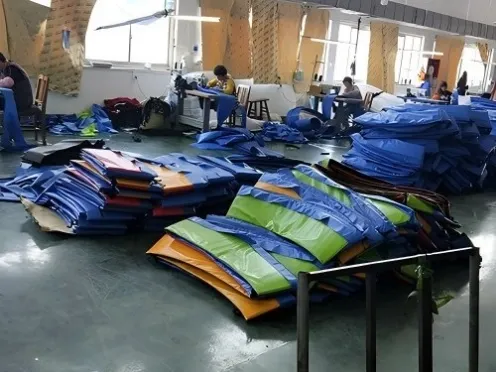
A trampoline is more polymer than it appears. The jumping mat is woven polypropylene (PP). The enclosure net and much of the padding system are polyethylene (PE) based. Spring covers are typically PVC-faced. All three material families price off the oil and petrochemical chain, so crude price movements reach trampoline costings with a lag — through resin, then film, fabric and foam, then the component quotation. When a supplier's price moves, this chain is usually why; when a supplier's price does not move during a resin spike, the adjustment has usually been taken out of the material instead — thinner fabric, lighter foam, lower UV package — which is the version of the story that returns as claims.
3. Energy and Steel: The Hidden Cost Layer
Frame production is energy-intensive: steel tube forming, welding and galvanising all carry energy costs that move with global energy prices. This layer is invisible in a finished trampoline but real in its price, and it explains why frame quotations can firm up even in a soft demand market. For buyers, the useful response is not to negotiate against physics but to understand the logic of a price adjustment when it comes — a supplier who can walk through their cost drivers is giving you the information you need to set retail prices with confidence.
4. Protecting Your Margins: Three Moves
Order against the calendar, not the headline. Production capacity and freight both tighten into the spring peak. Our production lead time runs 15–30 days in the off-season and 40–60 days in the March–July peak, counted from deposit and final artwork confirmation — booking production slots early is the cheapest hedge against both capacity and freight spikes.
Buffer inventory where the maths works. If warehouse capacity allows, holding safety stock on your proven sellers converts a supply disruption from a stock-out into a non-event — and stock-outs in peak season cost more than warehousing does.
Protect the product mix, not just the unit price. Margin defence is easier across a whole programme than on one hero model: accessories such as the 3-step trampoline ladder carry steadier margins than the headline trampoline and attach to every sale. A range whose accessories, spare parts and mid-tier models are planned deliberately absorbs cost pressure that a single-model programme cannot.
Conclusion: Plan B Is the Plan
Geopolitics cannot be controlled from a sourcing desk, but exposure to it can: earlier booking, deliberate buffers and transparent communication about material costs and shipping windows. Suppliers and buyers who share those numbers openly set prices that survive the season; those who discover them at the invoice do not.
Read next: How Rising EPE Foam Prices Impact Trampoline Safety Components in 2026 · Global Outdoor Trampoline Market Forecast 2025–2035