Global Outdoor Trampoline Market Forecast 2025–2035
Global outdoor trampoline market forecast 2025–2035: the drivers, channels and product upgrades shaping demand, and what importers should prioritise this decade.

Outdoor trampolines enter the 2025–2035 decade as the value core of the trampoline category: the highest unit prices, the strictest durability requirements and the most demanding compliance environment. This forecast sets out the forces that will shape the segment and what they mean for importers, distributors and private-label brands, extending the 2026 trampoline market outlook.
1. A Decade of Steady, Uneven Growth
The demand base is structural rather than fashionable: households across North America, Europe, Australia and a growing Asia-Pacific continue to invest in their outdoor space, family activity and home-based fitness, and the trampoline sits at the intersection of all three. Growth will not be even — it will concentrate in the markets and formats where safety specification and product quality are visibly better, while undifferentiated entry-level supply competes over a slower pool. For buyers, the decade rewards range planning over opportunistic ordering.
2. What Will Shape the Market
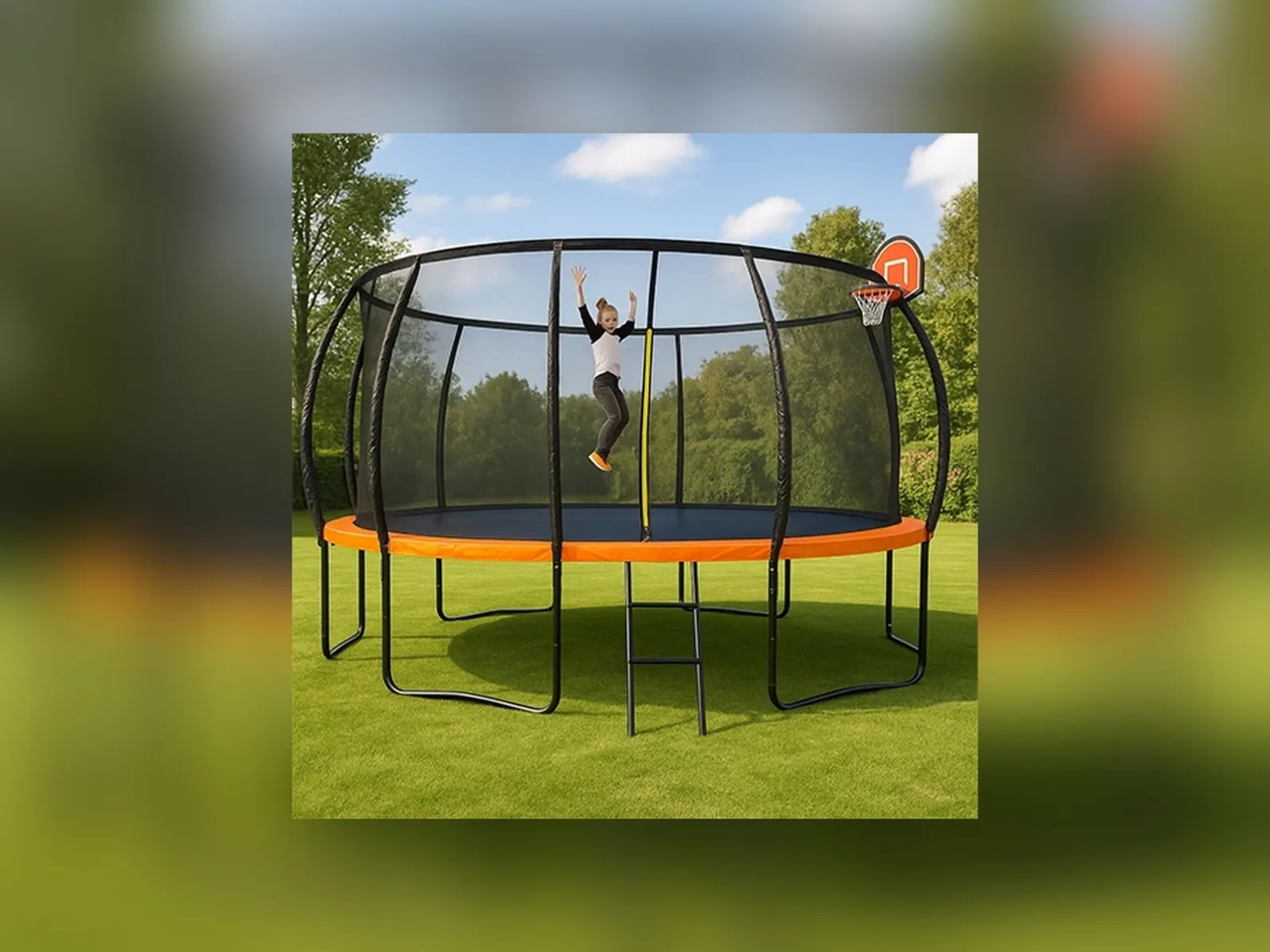
Residential outdoor recreation. The garden remains the primary venue, and larger family sizes anchor demand — the 10FT to 16FT run is where outdoor volume and value sit, with specification (frame protection, mat and net UV treatment, enclosure design) deciding which brands hold the shelf.
Commercial and hospitality demand. Parks, resorts, holiday parks and family entertainment venues buy outdoor trampolines on a different logic: documented load ratings, inspection routines and spare-parts continuity. Performance formats — a gymnastics trampoline for training use is the clearest example — serve this segment alongside large round models.
Safety and material upgrades. The specification frontier keeps moving: springless and fibre-rod enclosure systems, hot-dip galvanised frames, weatherproof nets and UV-stabilised mats. Each upgrade cycle resets what "standard" means at retail and squeezes models built to older specifications.
Connected features at the premium end. Motion sensing, app-linked activity tracking and game-based workouts are establishing a premium tier. Volumes are still small next to conventional models, but the tier matters: it gives brands a story and a price point above the entry-level fight.
3. Channels: Where Outdoor Trampolines Sell
E-commerce is the fastest-developing channel — marketplaces and direct-to-consumer stores reward transparent specification, verified reviews and packaging that survives final-mile delivery. Specialty and offline retail remains essential for high-ticket outdoor models, where customers want to see size and build before buying and where assembly guidance closes the sale. Between them sits the B2B channel — importers, distributors, wholesalers and private-label brands — where the decade's margin will be decided by landed cost, loading efficiency and after-sales performance rather than headline price.
4. Strategic Priorities for Buyers
- Compliance first. Buy product designed to meet the destination standard — EN71-14 in Europe, ASTM in the US, AS/NZS in Australia — and hold the test report for the exact model in your file before the season starts.
- Anchor the range on large outdoor sizes. The 10FT–16FT family run carries the segment; build the ladder deliberately instead of scattering SKUs.
- Sell the accessories programme. Ladders, covers, anchor kits and hoops raise basket value and margin on every trampoline sold, and they are the cheapest differentiation a retailer owns.
- Build factory relationships before you need them. Peak-season capacity, specification development and spare-parts continuity all flow to buyers with standing relationships, not spot orders.
5. Forecast FAQs
Which sizes dominate outdoor demand? Family garden sizes from 10FT to 16FT anchor the segment, with smaller sizes serving compact gardens and younger children.
Which standards apply? EN71-14 for Europe, ASTM standards for the US and AS/NZS for Australia and New Zealand. Ask for the test report naming your exact model and size.
Where does growth come from this decade? From specification upgrades in mature markets, commercial and hospitality installations, premium connected models, and continued household adoption in Asia-Pacific — not from cheaper entry-level product.
Conclusion
The outdoor segment's next decade belongs to buyers who treat it as a specification business: compliant product, deliberate size ladders, accessories attached, and factory partnerships built early. The demand is durable; the share will go to whoever is ready for it.
Read next: 2026 Global Trampoline Market Outlook: Logistics and Cost Pressures on Sourcing · Global Kids Trampoline Market: 2024 vs 2031 Outlook