Trampoline Size & Shape Guide: Choosing the Right Models for Your Market
Round, rectangular or oval? Compare bounce, safety, space and cost by shape, plus the size run from 6FT to 16FT, in this trampoline size & shape guide for buyers.
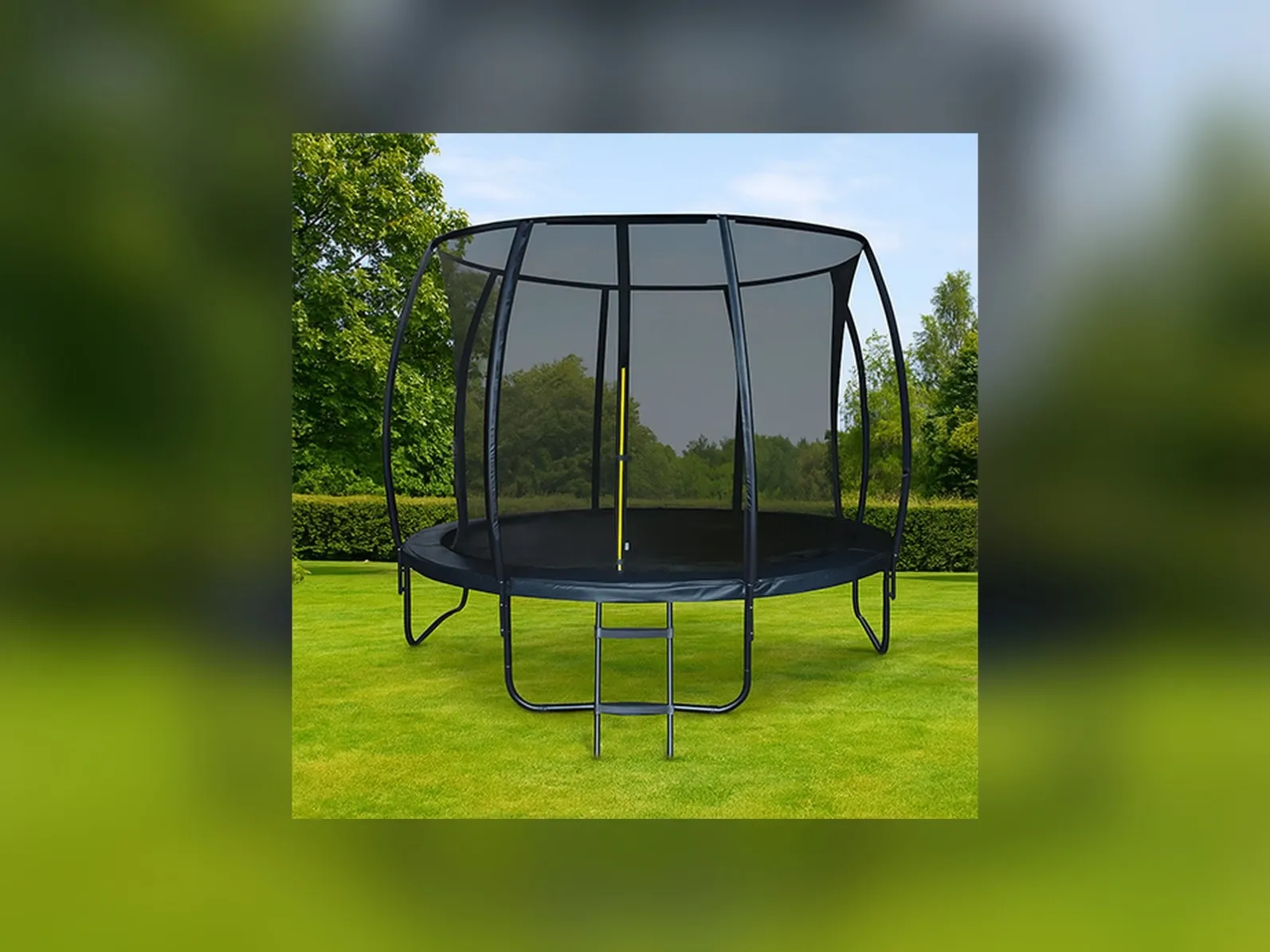
Shape is the first decision in any trampoline range — and the one buyers most often make on habit. Round models dominate volume, rectangular models own the performance segment, and oval models solve a specific space problem. This guide compares the three shapes on bounce, safety, space and cost, then walks the round size run from 6FT to 16FT so you can match each model to the market it will actually sell in.
1. How Shape Changes the Bounce
The difference starts with spring geometry. On a round trampoline, springs are arranged in a radial, sunburst pattern, so tension pulls the jumper back toward the centre. The result is a forgiving, centre-focused bounce that suits casual play and younger users. On a rectangular trampoline, springs run parallel along the long sides, producing a linear, predictable, truly vertical bounce across the whole bed — the reason rectangular models are the standard for gymnastics and serious training. An oval trampoline is a hybrid: parallel springs along the straight sides give lift, while the radial pattern at the curved ends keeps a softer, centred feel.
Frame engineering follows the same logic. Round frames distribute stress evenly around the circumference. Rectangular frames concentrate stress at the corners and need the strongest construction there. Oval frames must be reinforced along the long sides to resist bending, which makes them more complex to build than a round frame of similar size.
2. Shape by Shape: Where Each One Sells
Round: the volume shape
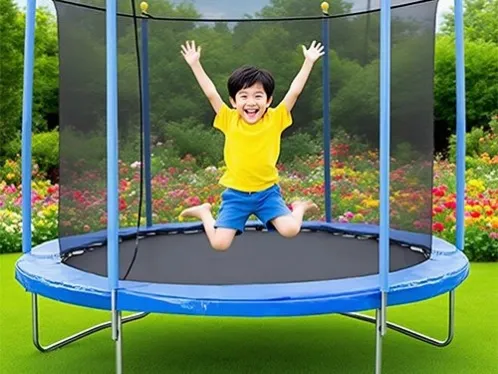
Round is the default family shape: the centre-focused bounce is inherently forgiving, enclosures are the simplest to manufacture with consistent tension, and unit costs are the lowest of the three shapes. For most retail programmes, round models carry the range.
Rectangular: the performance shape
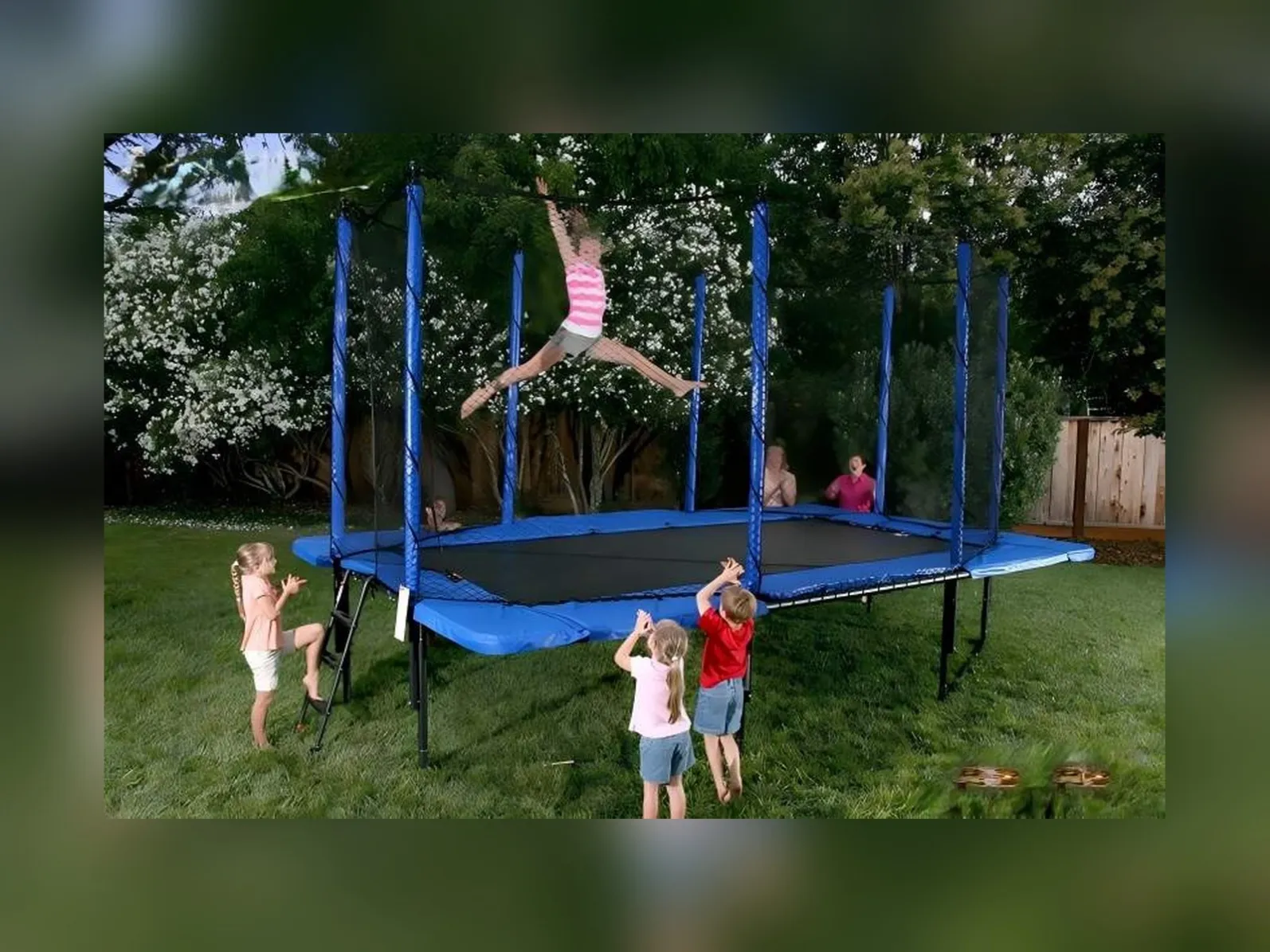
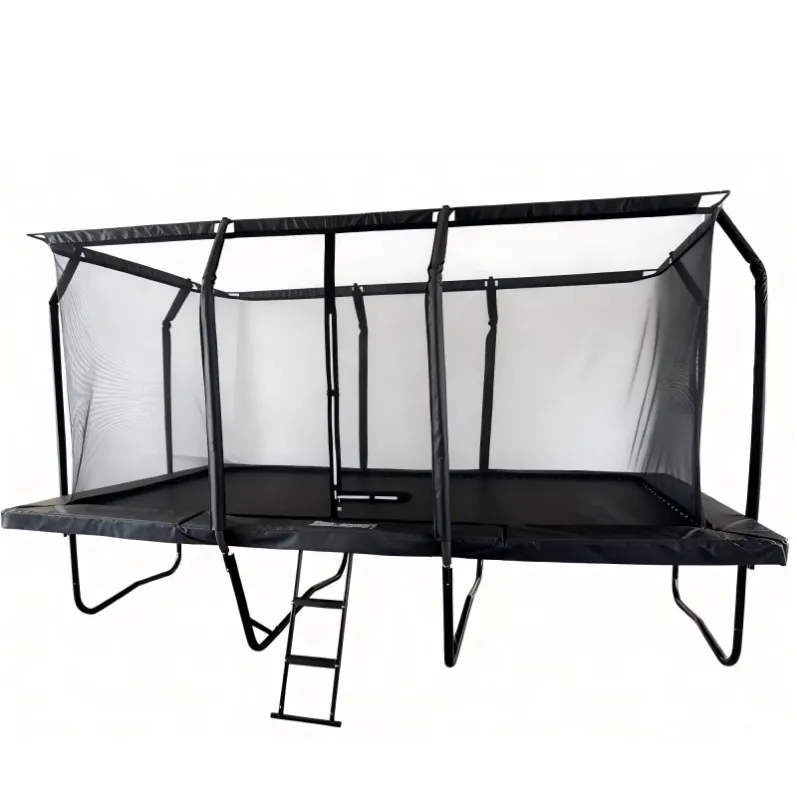
Rectangular models serve athletes, gyms and older, skilled users who need height and control. They cost more to build — stronger frames, more complex spring systems — and reward buyers who position them on performance rather than price.
Oval: the space-problem shape
Oval models fit long, narrow gardens where a round trampoline of equal jumping area will not fit, and they give multi-user families a longer bed without corners. Enclosures are the most complex of the three shapes because they combine straight and curved sections.
3. The Round Size Run: 6FT to 16FT
Within round models, size decides the customer. The pattern across markets is consistent:
- 6FT — the space-saving entry size for small gardens and younger children. Our rated capacity for the 6FT garden model is 70 kg.
- 8FT and 10FT — the classic best-sellers: big enough for growing children, small enough for average gardens. Rated capacity 120 kg.
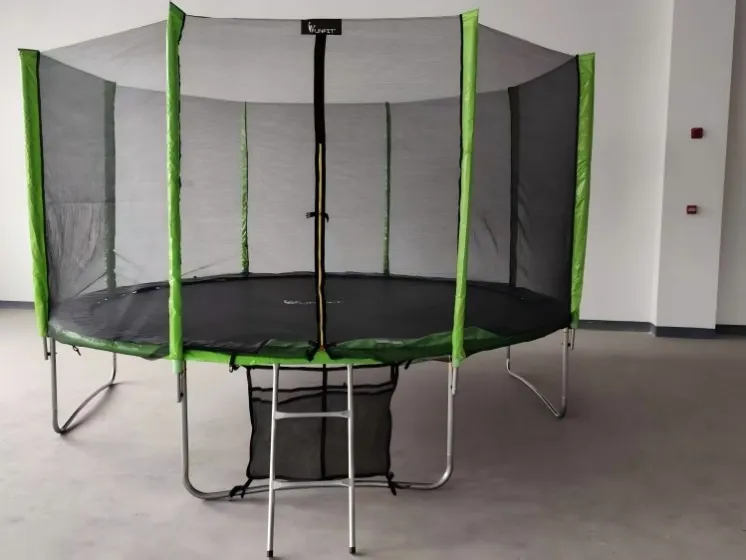
- 12FT — the most popular backyard size worldwide, and the anchor of most retail ranges. Rated capacity 150 kg, as on all our round models from 12FT up.
- 13FT and 14FT — the step-up sizes for larger gardens and older children; 14FT is where families who outgrow a 10FT usually land.
- 15FT and 16FT — the big-garden flagship sizes, bought on jumping area and frame strength rather than price.
Two range-planning notes. First, legs matter at the larger sizes: on a 10FT, a 4-leg (8-pole) base gives a visibly steadier platform than a 3-leg base, and it is a cheap upgrade to specify. Second, keep indoor and mini formats out of this ladder entirely — they are different products with different buyers, covered in our fitness and kids guides below.
4. Space and Clearance: What Your Customers Must Measure
Most returns and complaints in this category are measurement failures, not product failures. The guidance worth printing in your listings and manuals: allow at least 1.8 m (6 ft) of clear space on all sides of round and oval models, and extra clearance at the ends of rectangular models, where jumpers travel furthest. Overhead clearance, overhanging branches, slopes and fences all count. A scaled sketch of the garden settles most questions before purchase — encourage it.
5. Matching Shape to Commercial Buyers
For family entertainment centres and public play spaces, round models are the practical default: forgiving bounce for mixed users, simpler supervision, and the cheapest maintenance at scale. Gymnastics clubs and training facilities should be sold rectangular models on performance specifications. Schools, camps and community centres sit between the two — large round or oval models give them capacity and versatility for a wide age range. In every commercial case, ask about documented load ratings, spare-parts availability and inspection routines before discussing price.
Conclusion: Build the Range Around Shape, Then Size
Start with the shape your market actually needs, then choose sizes inside it. Our own range is built exactly that way, anchored by the round trampoline with safety net line from 6FT to 16FT, with rectangular and oval models for the segments round cannot serve. Get the shape decision right and the rest of the specification — springs, enclosure, packaging — falls into place.
Read next: Kids Trampolines with Safety Net: A Product Guide for Retailers and Importers · Fitness Rebounders & Mini Trampolines: A Buyer's Product Guide