Trampoline Safety Nets: Materials, Designs and How to Choose
How to choose a trampoline safety net: PE netting, inner vs outer designs, poles, closures and the standards that apply, in a buyer's guide to enclosures.
The safety net is the component that stands between a jumper and the ground, and it is the part of the trampoline where specification shortcuts are hardest to see and quickest to fail. This guide covers the decisions a buyer actually controls: net material, enclosure design, poles and attachment, closures — and how long a net should be expected to last.
1. Start With the Standards Framework
Two standards frame most enclosure requirements: ASTM F2225 in North America, which covers trampoline enclosures specifically, and EN 71-14 in Europe, which covers trampolines for domestic use. Between them they address the questions that matter — net strength, head and neck entrapment prevention, closure security and the structural integrity of the whole system under impact and static load. The buyer's takeaway is procedural, not technical: source nets designed and tested to the standard of your market, and ask for the test reports. A net that merely "looks like" a compliant net is the most common failure in this category.
2. Net Material: Polyethylene, Woven for Impact
Quality enclosure nets are woven or knotted polyethylene (PE). PE is specified because it holds tensile strength under repeated impact, tolerates rain, snow and temperature swings, and — when UV-stabilized — resists the brittleness that destroys cheap netting after a season in the sun. Judge a net sample by hand and by specification: mesh size small enough to prevent finger entrapment and toe catching, fabric weight and tensile values in writing, and UV stabilization stated, not implied. Thin, fence-like netting that feels like packaging material is a returns problem waiting for its first summer.

3. Design: Inner Net, Outer Net and Pole Geometry
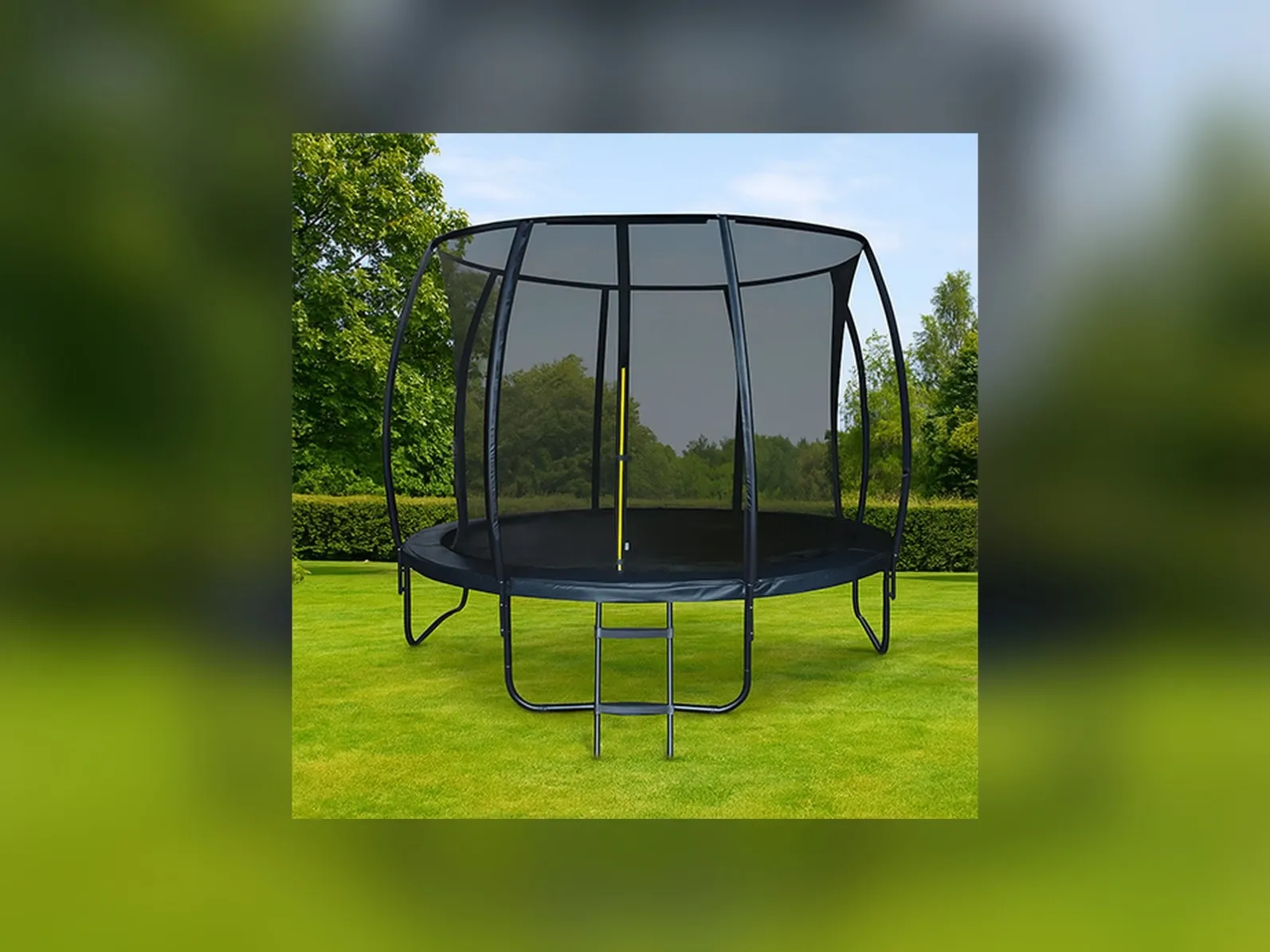
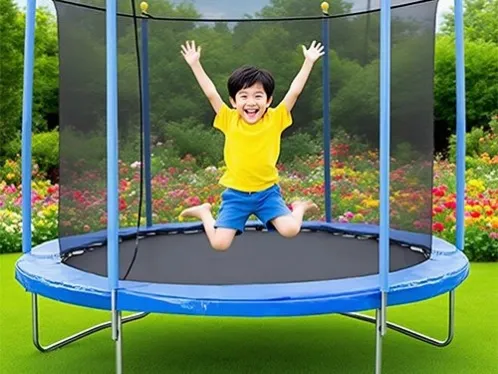
The structural choice is where the net sits. An inner net hangs inside the poles, separating jumpers from both springs and poles — the safer layout, and the one our replacement safety net (inner enclosure) range is built around. An outer net wraps outside the poles, giving a slightly larger jumping area but putting the poles inside the fall zone unless they are well padded. Pole geometry matters as much as position: curved poles angle the net away from the frame edge and create a more forgiving boundary than straight poles. Whichever design you stock, the bottom of the net must fasten securely to the frame or pass under the mat edge — a gap at the bottom defeats the entire system.
4. Closures and Attachment: The Weak Points
Most enclosure failures happen at the door and the seams, not in the middle of a panel. Specify a dual closure — zipper plus buckles or straps — sewn into reinforced webbing, and check that the zipper runs smoothly under tension. Attachment points between net, poles and frame should be webbing and hardware, not thin cord. Adding a net to an existing trampoline is possible, but only as a matched system: pole count, diameter and net height must correspond to the trampoline model, which is why retrofit nets should be sourced by model specification, not by trampoline size alone.
5. Lifespan and Replacement
A net's life is set by UV exposure, stitching quality and how it is stored. Expect to inspect nets each season and to replace them on condition, not on a calendar: significant fading and stiffness (UV degradation), any tear or hole, a failed zipper, or a net that no longer fits tautly are all replace-now signals. Retailers who stock replacement nets sized to the models they sell turn the category's main weakness into a recurring parts business — and give their customers a safe answer instead of a discarded trampoline.
Read next: Spring vs Springless Trampolines: A Buyer's Comparison Guide · Trampoline Parts & Materials Explained: A Component Guide for Buyers