Trampoline Parts & Materials Explained: A Component Guide for Buyers
Trampoline parts and materials explained for buyers: frame steel, jumping mats, springs, pads, nets and poles — and the specifications that decide lifespan.
A trampoline is a load-bearing safety system, not a simple consumer product. The difference between a model that performs safely for years and one that generates returns after a single season sits in component specifications that never appear on the retail box. This guide goes through the parts system by system — frame, mat, springs, pads, enclosure and poles — and sets out the material questions a buyer should ask of any supplier, including us.
1. Frame: Steel, Surface Treatment and Geometry
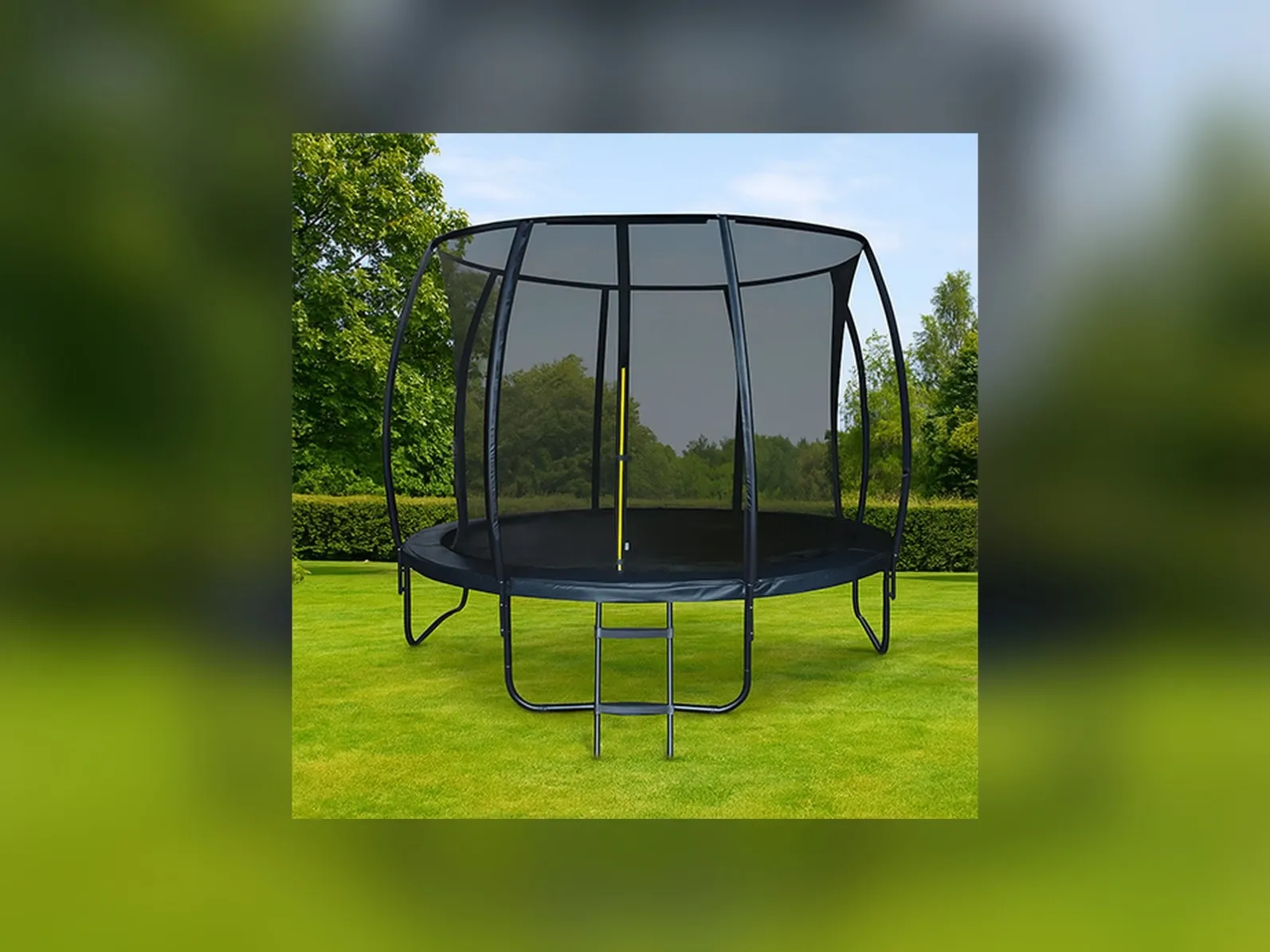
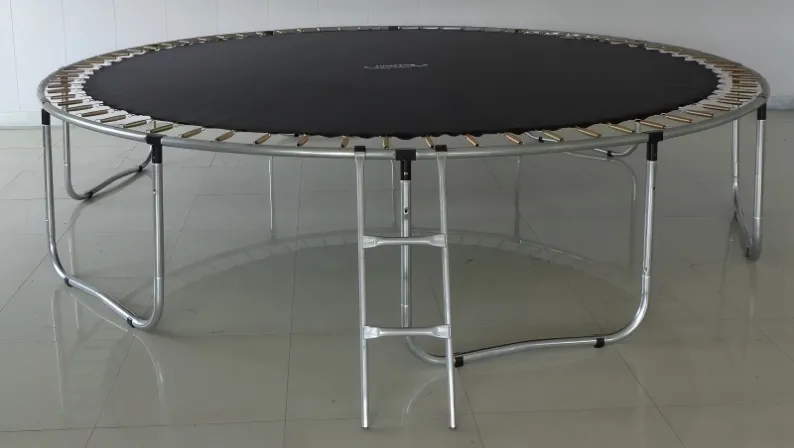
The frame decides structural life. Ask for tube diameter and wall thickness in writing — the difference between a 34 mm and a 38 mm tube, or between nominal and actual wall thickness, is the difference between a frame that stays true and one that deforms. Then ask how the steel is protected. Hot-dip galvanized steel carries its zinc layer inside and out and is the outdoor benchmark; electro-galvanized (zinc-plated) finishes are thinner; powder coating looks better and adds a barrier, but on its own it is a finish, not a corrosion system — for coastal markets, galvanized-plus-coated or fully hot-dip specifications are the safer buy. Frame height and leg geometry matter too: a taller frame gives jumping clearance on large sizes, and W-shaped or multi-leg bases spread load better than minimal designs.
2. Jumping Mat: PP Is a Starting Point, Not a Specification
Almost every jumping mat is woven polypropylene (PP) — the material name tells you almost nothing. What decides performance is weave density, UV stabilization and stitching. Untreated PP degrades fast in high-UV markets such as Australia and the southern United States; specify UV-stabilized material and ask how it is verified. Stitching is the second failure point: the mat's webbing and V-ring attachment take the full dynamic load, so stitching rows, thread quality and V-ring wire gauge belong in the tech pack. Our own volume line is the replacement jumping mat programme — replacement demand is where mat quality shows up first, because a mat that fails early comes back as a parts order or a complaint.
3. Springs: Wire, Coating and Count
Spring count alone does not define bounce. Wire diameter, coil length, hook design and surface treatment decide how a trampoline feels in year three. Zinc-coated springs are the standard; heavier coatings or stainless options serve wet and coastal markets at a price. Gold- versus silver-coloured springs are a finish difference, not a performance class — judge springs by wire gauge and coating specification, and by whether the supplier can hold spring tension consistent across a production run, because uneven tension is what users feel as a "dead" side.
4. Spring Pads: Where Cost-Cutting Shows Fastest
The pad covers the springs and frame edge, and it is the component where cheap builds reveal themselves first. Outer material is the key choice: PVC outlasts PE decisively under UV — PE pads crack and split, typically within a season or two, while a decent PVC pad keeps its flexibility for years. Inside, foam type and density (EPE is the common standard) decide impact absorption and shape retention. Width matters as much as thickness: the pad must cover the springs and the frame tube completely, with ties or elastic that keep it in place. When you compare quotes, a pad upgrade is usually the cheapest lifespan improvement available.
5. Enclosure: Net, Poles and Connectors
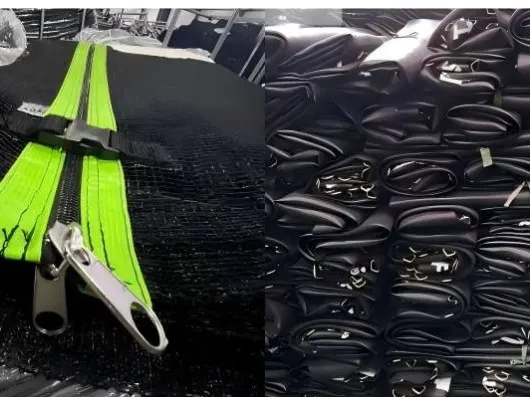
The enclosure is a primary safety barrier, and in warranty data it is where most safety issues originate. Net material should be UV-stabilized polyethylene; the entry zipper and its stitching take concentrated stress and fail early on cheap builds. Poles come in steel or fiberglass: solid fiberglass rods flex and shed impact, hollow rods cost less; steel poles need the same corrosion thinking as the frame. Where poles meet the frame, connector finish matters — powder-coated and electro-galvanized T-connectors behave differently over years of weather. The full specification method for nets is in our safety net guide, linked below.
6. Climate-Based Specification
There is no single correct build — there is a correct build per market. High-UV regions need UV-stabilized mats, pads and nets as a system. Cold climates need materials that stay flexible instead of turning brittle. Coastal areas need the corrosion specification raised on every steel part, not just the frame. This is why component questions belong in the purchase order, not in a complaint after the first season: a trampoline engineered for your climate is a specification decision, made before production.
Read next: Trampoline Safety Nets: Materials, Designs and How to Choose · Rebounding Benefits: What Fitness Trampoline Buyers Should Know