Trampoline Mat Sourcing Guide: Materials, Stitching and UV Standards
Trampoline mat sourcing guide: PP vs alternatives, V-ring specification, stitching quality, UV resistance testing and how to verify a mat before you buy.
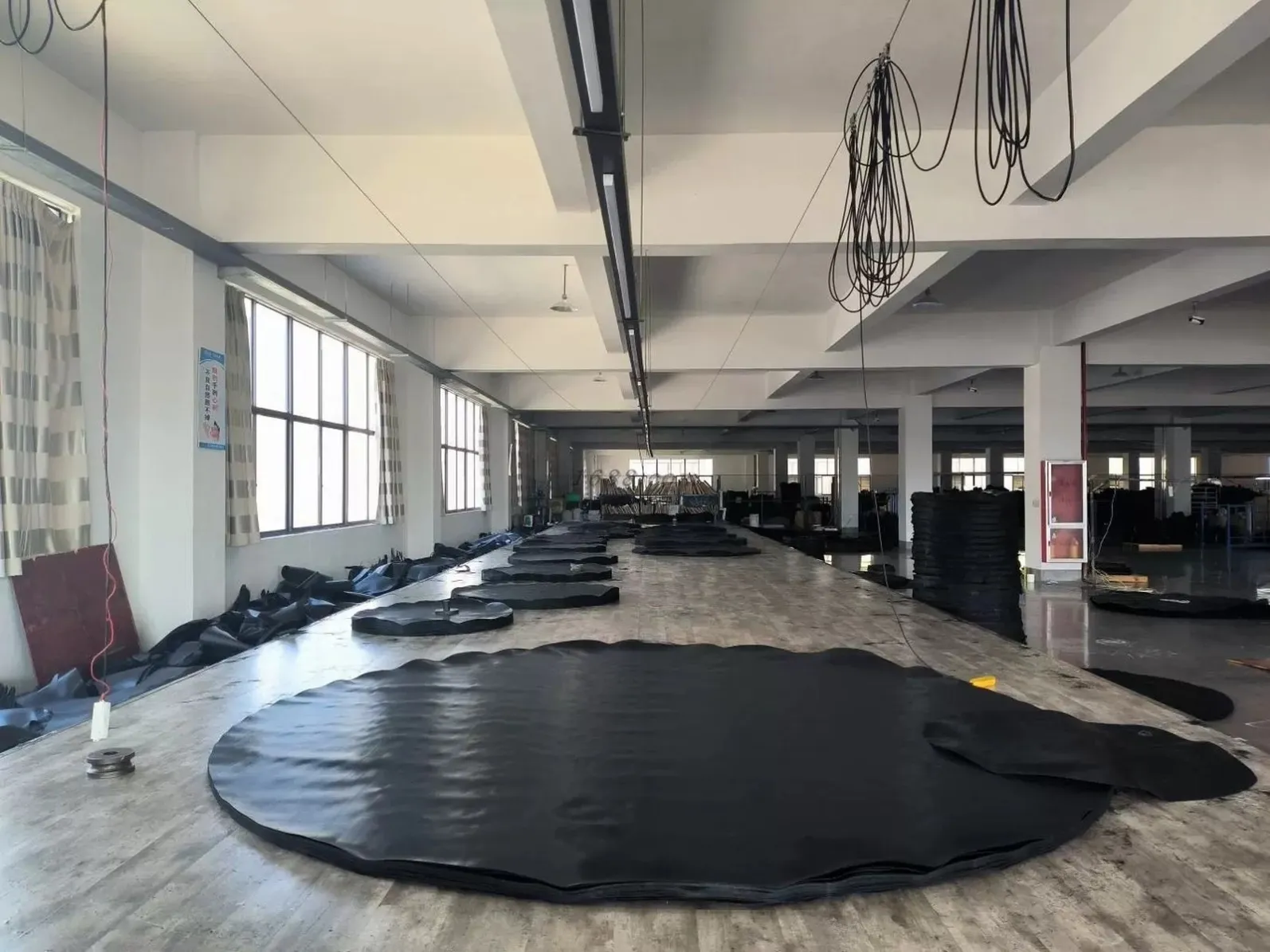
The jumping mat is the working surface of every trampoline — the part that takes every landing, every UV hour and every weather cycle. It is also the part where specification differences hide best. This guide gives buyers the sourcing criteria for mat material, V-rings, stitching and UV performance, and sits inside the wider framework of choosing a trampoline supplier.
1. Mat Material: PP Is the Industry Standard
More than 90% of trampoline mats are woven polypropylene (PP): it balances strength, UV behaviour, water shedding and cost better than the alternatives for outdoor use. When sourcing, specify the fabric by weight and weave quality, and be suspicious of unspecified "high-strength fabric" language. The raw material behind our own trampoline fabric material is graded at 260 g — use a stated fabric weight as the starting point of any mat conversation.
2. V-Rings: The Load Path
Every bounce loads the mat through its V-rings. Sourcing criteria from the original guide: V-ring wire diameter of at least 5.0 mm, secure attachment into the mat's webbing border, and a ring count that matches the frame's spring/hole count exactly. A bent or undersized V-ring is a mat failure waiting for its first heavy user. Count the rings on the sample and compare them with the specification — this is a two-minute check that prevents a season of claims.
3. Stitching: Where Mats Actually Fail
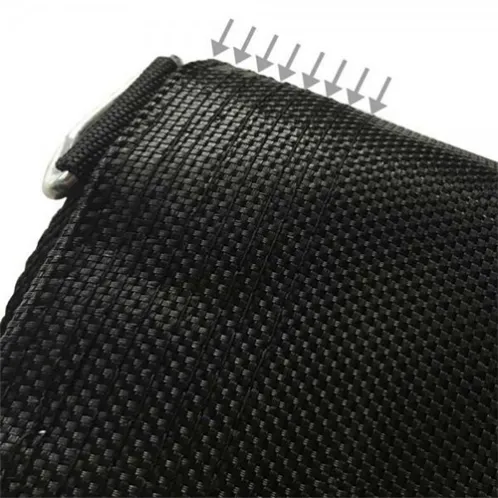
Mats rarely fail in the middle of the fabric; they fail at the edge, where stitching carries the load into the V-rings. Check: number of stitching rows around the border, thread quality (UV-resistant thread matters as much as UV-resistant fabric), stitch density and consistency, and reinforcement where the webbing meets the fabric. Pull-test the sample's edge by hand and inspect the reverse side — loose loops and skipped stitches show there first.
4. UV Resistance: Ask for the Test Basis
For high-UV markets, the original guide's criterion is a useful benchmark: at least 80% tensile-strength retention after 1,000 hours of accelerated UV exposure (ASTM G154). Whatever figure a supplier quotes, ask for the test standard, the exposure hours and the retention measure behind it — a UV claim without a test basis is a colour, not a specification. Match the UV package to the destination market: Northern Europe and equatorial markets are different products.
5. Verifying a Mat Before You Buy
- Confirm fabric weight and material in the written specification
- Count V-rings; measure ring wire diameter
- Inspect stitching rows, density and the reverse side
- Ask for the UV test basis (standard, hours, retention)
- Fit the sample mat to the sample frame — ring count and spring count must agree
- Record the full mat specification in your model record for future spare-parts orders
Read next: Scaling a Trampoline Business in Europe: Standards, Stock and Strategy · Stocking Trampoline Spare Parts: A Guide for Importers and Retailers