How to Choose a Reliable Trampoline Supplier in China: A B2B Sourcing Guide
How to choose a reliable trampoline supplier in China: five evaluation factors, MOQ and payment risks, factory vs trading company, and an import SOP checklist.
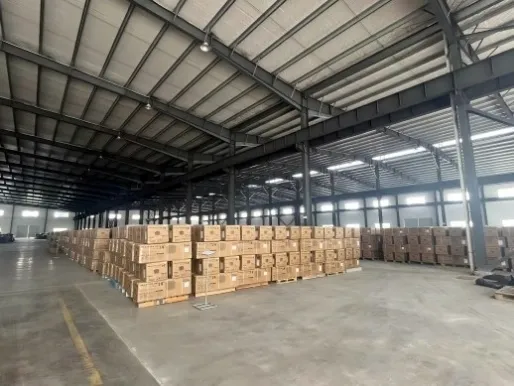
Finding a trampoline manufacturer is easy. Finding one that will not leave you stranded with a container full of safety hazards and customer complaints is the real challenge. One failed TÜV inspection or a single batch of rusting springs can damage a brand's reputation overnight — and in B2B sourcing, the gap between "cheap" and "cost-effective" has never been wider.
This guide sets out how experienced importers evaluate a trampoline supplier in China: the five factors that matter, the commercial risks to manage, and a step-by-step import process that keeps quality under your control.
1. Start With Specifications, Not Price
Most buyers make the mistake of comparing quotations before comparing specifications. In the trampoline industry, a $10 difference in unit price usually hides a much larger difference in safety and service life. Before you judge any quote, define your tech pack: diameter, spring count and length, frame tube diameter and wall thickness, mat material, pad specification and enclosure design. A supplier who cannot quote against a written specification — or who asks no questions about it — is telling you something about how they work.
2. The Five Factors That Define a Reliable Supplier
Factor 1: Material Specifications
Do not settle for "high-quality steel." Ask for numbers: tube diameter, wall thickness, and whether galvanization covers both the inside and the outside of the tube. The same applies to mat fabric weight, spring wire diameter and pad foam thickness. A professional manufacturer states these figures in writing and holds them across batches.
Factor 2: Production Capacity and Lead Times
In B2B, "out of stock" means lost revenue. Ask for monthly output capacity and how the factory schedules peak season. A reliable partner gives a realistic production window and tells you early if it slips — not after your selling season has started.
Factor 3: R&D and Customization Capability
The market is full of identical "me-too" products. Does the factory have its own engineering team? A true manufacturer can adjust spring counts, enclosure structures and packaging to your market instead of only offering a fixed catalogue.
Factor 4: Supply Chain Transparency and Ethics
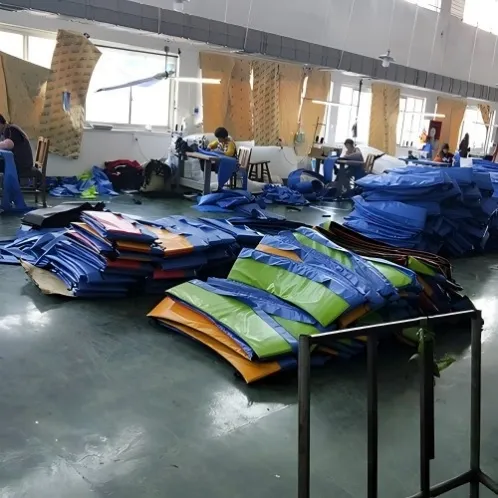
Look for ISO 9001 quality systems and BSCI social audits. A transparent supplier will share recent audit reports and invite you — in person or by video — to see the production floor.
Factor 5: After-Sales Support and Warranty Terms
If a supplier offers a vague "1-year warranty" without specifying what it covers, walk away. A serious factory defines warranty coverage by component, keeps spare parts available for dispatch, and has a written claim procedure. Choosing a supplier without reliable after-sales support is one of the most expensive mistakes a buyer can make: when problems appear, an unresponsive supplier leaves you carrying the full cost.
3. Factory or Trading Company?
Both models exist in China, and they behave differently. A factory controls materials, production scheduling and quality directly, and can customize construction — but may be less flexible on small mixed orders. A trading company can consolidate products from several factories, but its quality depends entirely on partners it does not control, and an extra margin sits between you and the producer. Whichever model you choose, verify who actually makes the product and who is accountable when something goes wrong.
Scale alone is not proof of safety, either. Very large factories prioritize very large customers; mid-sized buyers can find their orders deprioritized in peak season, and some large operations quietly outsource overflow production. A right-sized, specialized factory that treats your order as core business is often the safer bet.
4. MOQ, Lead Time and Payment: Managing the Commercial Risks
MOQ is not arbitrary: it reflects material purchasing, production setup and packing efficiency. A supplier who accepts any quantity at any price may be cutting something you cannot see. Lead time should be broken into stages — materials, production, inspection, loading — not given as a single promise. On payment, staged terms tied to verifiable milestones (deposit, inspection pass, shipment) protect both sides; be cautious with any arrangement that removes your leverage before quality is confirmed. And consider the hidden cost of the cheapest option: suppliers who win on price alone sometimes disappear mid-season, leaving buyers without parts, documents or recourse.
5. Importing Directly: A Four-Step SOP
- Technical specification alignment: define your tech pack before asking for a quote.
- Sampling and lab testing: stress-test the sample, check weld points, and send it to a third-party lab (SGS, Intertek or TÜV) to verify it against your market's standard.
- Pre-shipment inspection: arrange a final random inspection before the balance is paid and the container is loaded.
- Compliance documentation: confirm the bill of lading, certificate of origin and the test reports for your market are complete before the vessel sails.
Conclusion: Choose a Partner, Not Just a Supplier
The right supplier decision balances cost with long-term brand safety: written specifications, verifiable testing, transparent production and defined after-sales support. Our own range — from the pro-series backyard trampoline line to OEM projects built to a buyer's tech pack — is produced under the same discipline this guide describes. If you are evaluating suppliers for next season, apply the five factors above to every candidate, including us.
Read next: Round Trampoline Wholesale Guide: Sizes, Pricing and Buying Plans · Sourcing Kids Trampolines: The Ultimate B2B Buyer's Guide