Trampolines for Hotels, Resorts & Holiday Parks: A Commercial Buyer's Checklist
Outdoor trampolines for hotels, resorts and holiday parks: a buyer's checklist for importers and project buyers — models by zone, the standards question, spares and daily operations.
A trampoline used to be a backyard purchase. Increasingly, it is a hospitality purchase.
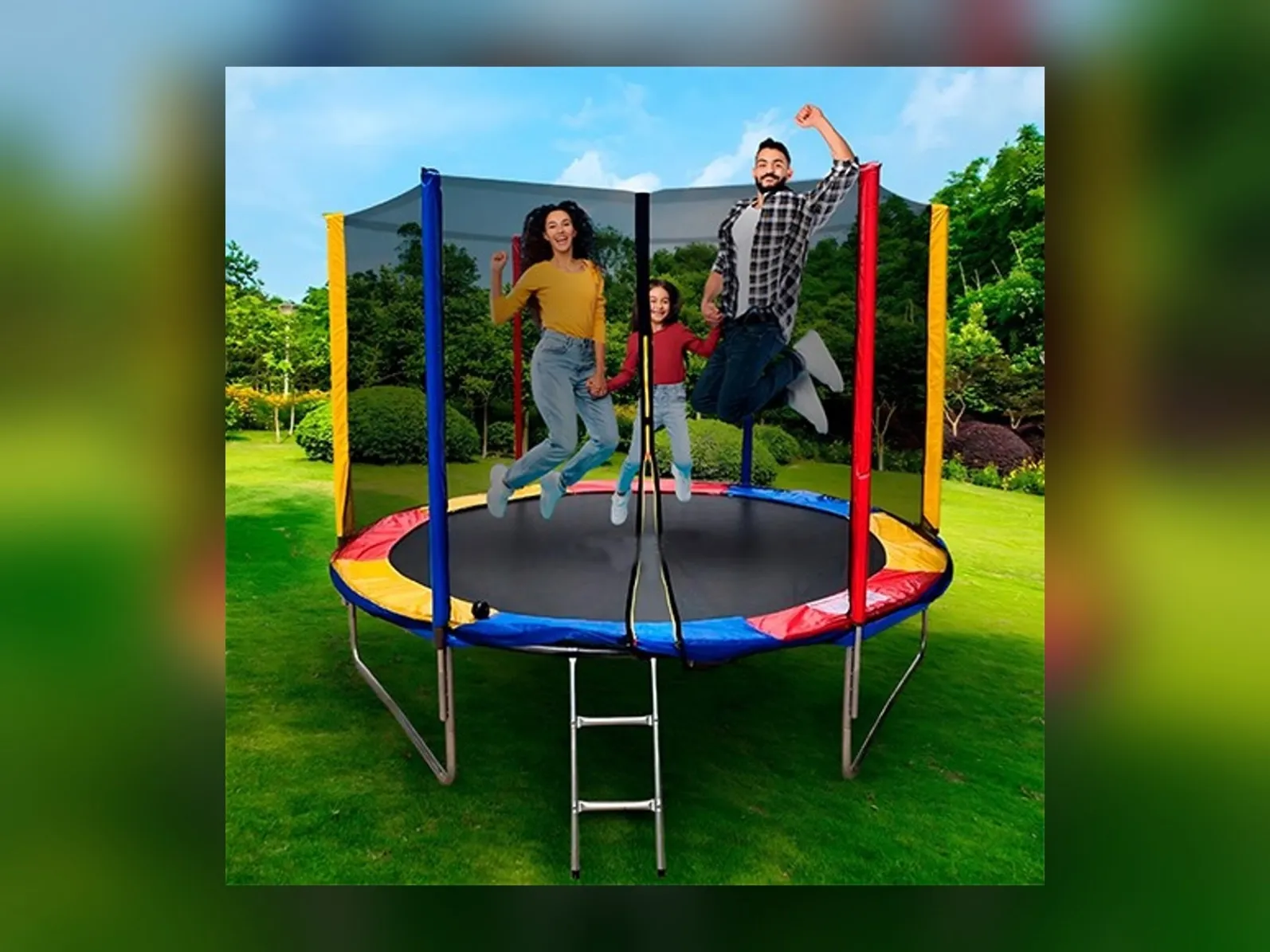
Hotels, resorts and holiday parks are adding bounce to their guest offer for the same reason they added pools and playgrounds: it is visible, it photographs well, and families with children choose properties partly on what there is to do on site. A trampoline area can be that reason — or, bought wrong, it can be a maintenance headache and a safety liability sitting in the middle of the lawn.
Buying for guests is not backyard buying. The users rotate daily, the equipment stays outdoors in all weather, and the buyer is usually an importer, distributor or project buyer ordering for a property they may never visit. This guide is the checklist we would work through before ordering — for outdoor trampolines used as a guest amenity: the family lawn, the activity field, the kids' club and the indoor wellness room.
1. Why Hotels, Resorts and Holiday Parks Are Adding Trampolines
Three reasons keep coming up:
- Families book around activities. For a resort or holiday park, a trampoline zone is a bookable differentiator in photos and listings, not just a free amenity. It gives parents a reason to choose this property over the one next door.
- It earns its space. Compared with a pool or a built playground structure, a trampoline installation is fast to set up, easy to relocate, and far cheaper per guest-hour of use. Several units can serve different age groups in the same area.
- It fits the resort season. Outdoor trampolines match the peak family-travel months, and the same models that serve a resort lawn also serve the garden-trampoline retail channel — so an importer can supply both markets from one range.
For importers and distributors, hospitality projects are also rarely one-unit orders. They are multi-unit orders: several trampolines, often in more than one size, plus spare parts, planned together.
2. What Makes Guest Use Different From a Backyard
A hotel lawn changes the buying criteria in four ways:
- Users rotate constantly. Unlike a family trampoline, a resort trampoline is used by a different set of children every week, with different ages, weights and experience levels — and often with less supervision than a parent provides at home. The enclosure, padding and frame have to be specified for that reality, not for one careful family.
- The duty cycle is far higher. A backyard trampoline might see an hour of use a day. A resort unit in peak season can see that before lunch. Springs, mats and nets wear faster, which is why project buyers should plan the spare-parts order at the same time as the trampolines, not after the first failure.
- It lives outdoors, permanently. Sun, rain and wind act on the mat, the net and the frame every day. UV resistance of the jumping mat, rust protection on the frame, and a plan for high-wind days are buying criteria, not afterthoughts.
- Appearance is part of the product. Guests experience the equipment as part of the property. Colour consistency, clean branding and tidy presentation matter far more than in a private garden — and they are exactly what an OEM order can control.
3. Choosing Equipment by Zone
Most hospitality projects need more than one type of trampoline. Match the model to the zone:
The family lawn: round trampolines with safety nets
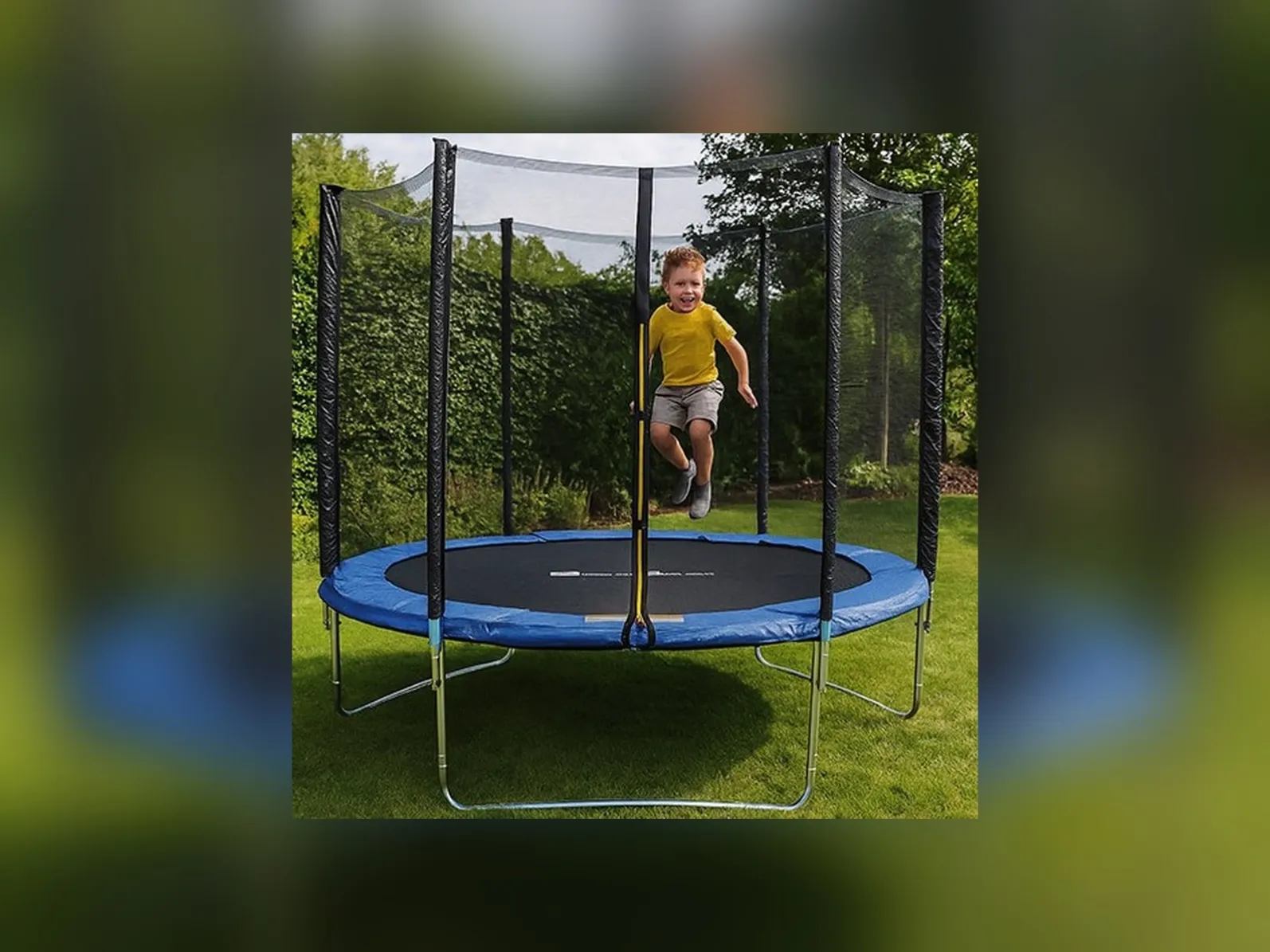
For the general guest lawn, round trampoline with safety net models are the default — available from 6 ft to 16 ft, with an inner safety net and tested to the EN 71-14 domestic trampoline standard. Size the unit to the space and the age group: smaller diameters for younger children and tighter lawns, larger diameters where the property wants a visible centrepiece that several children can use in rotation. The enclosure is not optional in a guest setting; it is the single most important safety feature.
The activity zone: oval and rectangular models
Where a property runs organised activities — a kids' club programme, a gymnastics or fitness session, or a holiday-park activity field — oval trampoline with safety net models (7×10 ft to 10×17 ft, heavy-duty) combine the stability of a round frame with the performance of a rectangular bed. Rectangular gymnastics trampolines, in sizes from 5x7ft up to 10x23ft with heavy-gauge steel frames and UV-resistant mats, are the performance option for gymnastics-style use and for markets such as AU and US where rectangular models are the established format for structured activity. Keep these in supervised zones — they are for organised activity, not unsupervised free play.
The kids' club: dedicated children's models
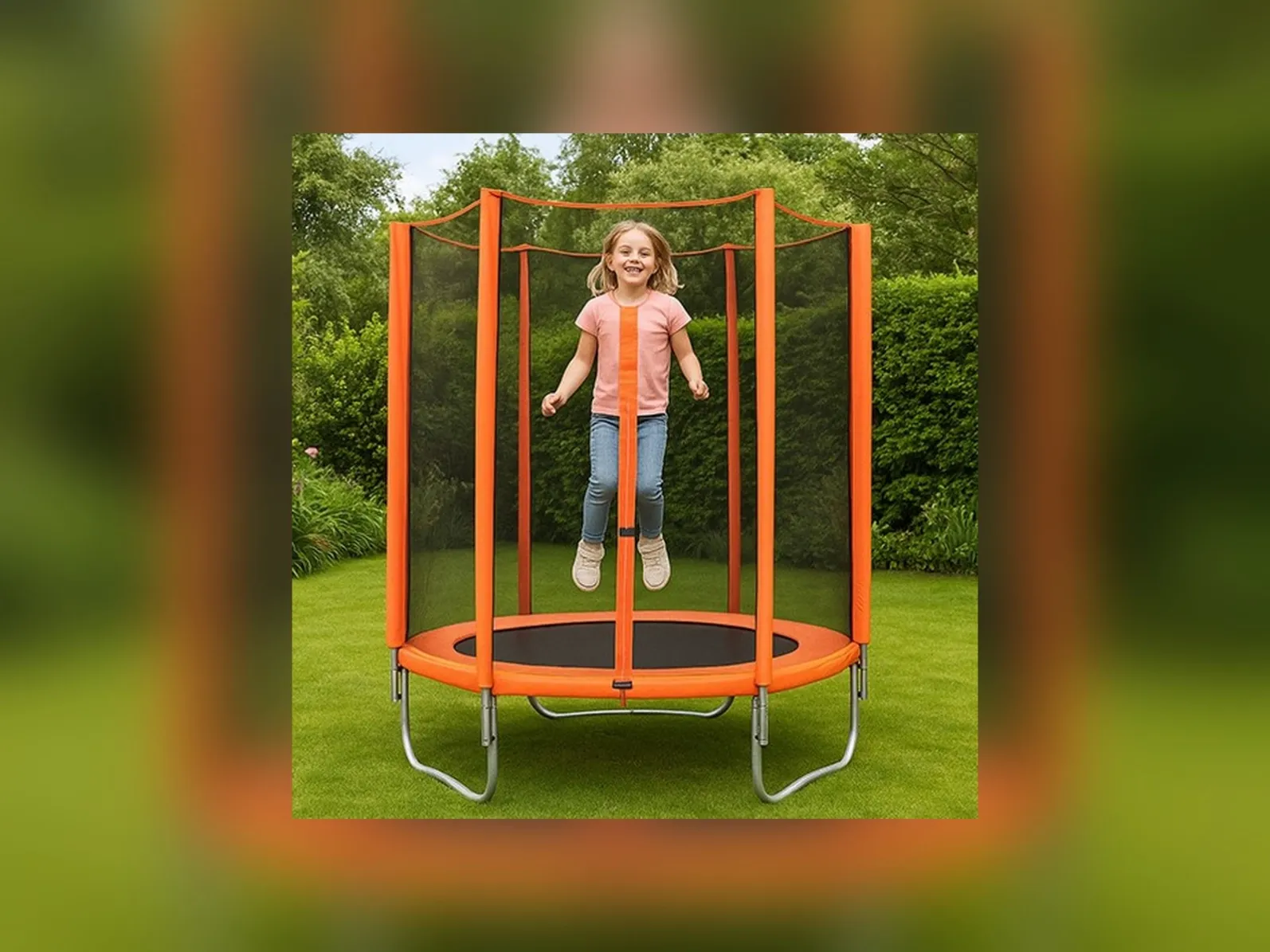
For younger guests, use models designed for them rather than a scaled-down adult trampoline. Kids trampolines with safety nets are sized and enclosed for small children, and they let a property separate age groups instead of mixing toddlers with teenagers on the same bed — one of the simplest safety decisions a resort can make.
The indoor wellness space: fitness rebounders
If the property also has a gym, fitness studio or wellness room, mini fitness trampolines extend the offer indoors — for example the 40″ foldable rebounder with an adjustable handlebar and a 264 lbs weight capacity, which suits supervised fitness classes and stores flat when the room is needed for something else. This is the same product family many importers already sell into home-fitness and gym channels, so it can be stocked alongside the outdoor range.
4. First, Know Which Standard Your Project Falls Under
This is the point buyers most often get wrong, so it comes before the checklist. Trampolines like ours are designed and tested as domestic trampolines — to EN 71-14 in Europe and ASTM F381 in the United States. Those standards cover trampolines used in a home garden, and they are the standards our range is built and certified to.
Equipment installed for public use — public playgrounds, pay-to-play attractions, unsupervised municipal play areas — sits under a different regime. In Europe that is the EN 1176 playground-equipment series, which adds requirements on installation, inspection and maintenance that a domestic trampoline is not certified against. A domestic trampoline and a public-use playground system are different product classes, even when they look similar in a photograph.
Where does that leave a hotel or holiday park? In many markets, properties run domestic-standard trampolines as a supervised guest amenity — staffed at peak hours, with posted rules and regular inspections — and that is accepted practice. But acceptance depends on the country, the property's insurer and how the area is run, and it is the buyer's responsibility to confirm it before ordering. If your project, your insurer or your local authority requires EN 1176-certified public-use equipment, tell your supplier at the start: that is a different product class, and a supplier who blurs the line to win the order is not doing you a favour.
For a deeper comparison of the standards themselves, see our guide to trampoline safety standards and certifications.
5. Safety and Compliance: Ask Before You Order
With the standards question settled, confirm these points in writing before placing the order — the details differ by market, and the right answer depends on the model and the destination country:
- Enclosure and padding: inner safety net fitted as standard; spring and frame padding covering all hard parts, in a colour and thickness specified for daily guest use.
- Frame and mat: heavy-gauge steel frame with rust protection; UV-resistant jumping mat rated for permanent outdoor use.
- Anchoring and wind: ground anchors or ballast specified for the largest model in the order, plus a written high-wind procedure — deflate nothing, but take nets down or move units under cover when the property's weather threshold is reached.
- Surfacing and placement: a flat, clear area with safety clearance on all sides; no hard surfacing directly under the bed; sightlines so staff can see the whole zone from one point.
- Documentation: test reports and factory compliance documents are available per model and target market — ask for the documents that match the destination country, and keep them with the property's safety file.
- One user at a time, by age and weight: post the property's rules at the zone entrance, and size the units so the rules are realistic for the guests actually using them.
6. Space Planning and Day-to-Day Operations
A trampoline zone is a small operation, not just an installation. Plan it like one:
- Zone the ages. Separate the kids' models from the family models and the activity models, with clear signage. Mixed-age free play is where most resort incidents start.
- Staff it in peak hours. Even a well-enclosed trampoline needs a staff member watching during the busiest periods — for rule enforcement, queue management and first response.
- Rotate and rest units. In peak season, rotate which units take the heaviest use, and inspect nets, pads and springs on a fixed schedule — daily visual check, weekly detailed check. Log it.
- Plan for the off-season. Nets and pads should be removable for cleaning and storage; frames should be covered or moved under cover where the property closes for winter. The off-season is also when spare parts should be ordered, not the week before reopening.
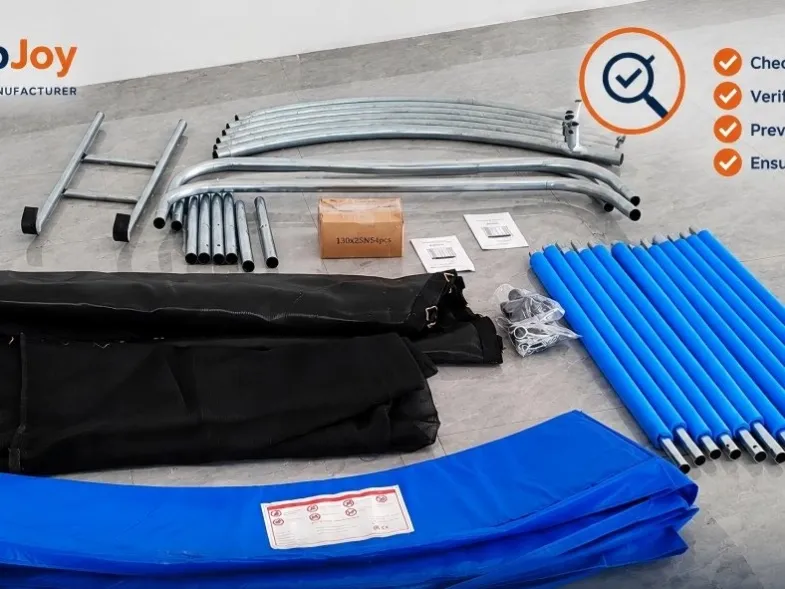
- Keep spares on site. Springs, net panels, pads and mat spares belong in the property's store room from day one. A unit waiting weeks for a small component is a guest-facing gap in the middle of peak season — which is why spare parts and accessories should be part of the first order, sized to the number of units.
7. Checklist: Before You Order
- Guest profile defined: ages, expected daily use, supervised vs. free-play zones
- Models matched to zones: round with net for the family lawn, oval/rectangular for activity zones, kids' models for the kids' club, rebounders indoors
- Sizes confirmed against the real lawn/room dimensions, including safety clearance
- Enclosure, padding, frame gauge and UV mat specified in writing
- Standards question answered (domestic vs. public use) and compliance documents requested for the destination market
- Anchoring, surfacing and wind procedure agreed with the property
- Spare parts (springs, nets, pads, mats) included in the first order
- Branding and colours matched to the property or the importer's brand
- One consolidated shipment, one after-sales contact for parts and claims
- Staff inspection routine and guest rules drafted before the units arrive
8. Why One OEM Supplier for the Whole Project
Hospitality projects expose mixed sourcing very quickly: if the family trampolines, the activity models and the spares come from three different factories, nothing quite matches, colours differ, spare parts have three different lead times, and no one owns the whole result.
A single OEM manufacturer for the complete project solves several problems at once. Through an OEM/ODM programme — 15+ years of manufacturing, 20,000+ sets a month, 50+ export countries — frame colours, net colours and logo details can be coordinated across every unit, so the equipment reads as part of the property's own offer rather than bought-in garden stock. Production is batched together, keeping consistency across units — important when a property group equips a second or third location later. And when a spring or a net panel needs replacing, there is one parts channel and one contact who knows exactly which configuration was delivered.
For importers, the same logic applies: a complete, brandable range from one factory is a far stronger proposal to a hotel group than a list of unrelated models.
Frequently Asked Questions
How many trampolines does a resort actually need?
Start from zones, not from a number. Most properties begin with one family-lawn unit, one kids' unit, and — only if they run organised activities — one activity-zone unit, then expand once usage is proven. Ordering the spares with the first units matters more than ordering extra units.
Can the trampolines carry our hotel's or our brand's identity?
Yes. Under OEM/private label production, frame and net colours and logo details can be customised, so the equipment matches the property's palette and the importer's brand rather than looking like generic garden stock.
What maintenance should property staff expect?
Day-to-day care is simple: a daily visual check of nets, pads and springs, a weekly detailed inspection, cleaning of mats and pads, and prompt replacement of wear parts. This is why spare parts belong in the first order — a unit waiting weeks for a small component is a guest-facing problem in peak season.
Plan Your Hospitality Trampoline Project
Whether you are a hotel operator planning a new family offer, a holiday-park buyer fitting out an activity field, or an importer preparing a proposal for a hospitality client, the most efficient next step is to plan the zones and the equipment list together. Send a wholesale inquiry with your property type, the zones you want to equip, and the destination market, and we will recommend a complete package — models, sizes, spares and compliance documents — sized for your project.