Trampoline Quality Control & Pre-Shipment Inspection: A Buyer's Guide
Trampoline quality control and pre-shipment inspection: verify tube thickness, check parts against the BOM, control cartons and packing before the container loads.
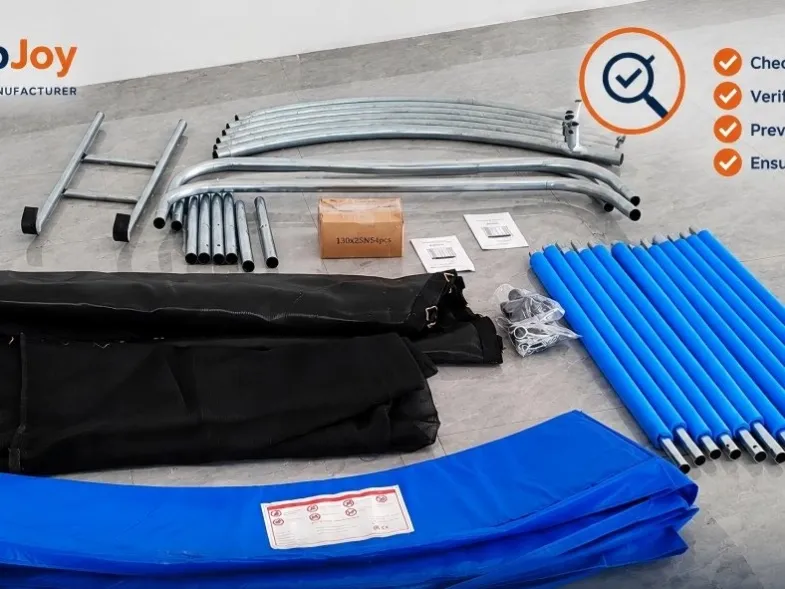
For trampoline importers, distributors and retailers, quality is not only about steel thickness, galvanization or mat strength. A trampoline can be manufactured correctly, arrive undamaged — and still be unsellable because one component is missing, or because a component belongs to another size, specification or order. For an importer handling thousands of units in a season, a small packing mistake becomes an expensive after-sales problem. This guide covers the two halves of pre-shipment control: verifying the product itself, and verifying that the right parts are in the right cartons.
1. Define Steel Tube Requirements Precisely
Most tube disputes start with vague language. "Thick tube" is not a specification. State the required diameter and wall thickness as numbers, state the tolerance you accept, and state how thickness will be measured — a caliper reading on a cut section is evidence; a supplier's assurance is not. Then lock the approved sample and the bill of materials (BOM): every later check compares production against those two documents. Put critical requirements into the commercial documents (purchase order and specification annex), not only into chat messages.
2. Inspect Through Production, Not Only at the End
A final inspection alone cannot catch a wrong material that was cut on day one. Effective control follows the process:
- Material inspection before mass production: verify tube, fabric and spring deliveries against the specification before cutting starts.
- Tube cutting and preparation: check dimensions and hole positions — hole count is a specification, not a detail.
- Welding: check joint quality and consistency.
- Surface treatment: verify galvanization or coating before parts disappear into assembly.
- Trial assembly: assemble sample units from production parts to expose mismatches early.
- Packaging: apply the packing-stage controls in section 5.
3. Same Size Does Not Mean Same Parts
A common misunderstanding is that parts are interchangeable if the trampoline size matches. Two products can both be "10FT" and differ in spring quantity, frame hole quantity, mat V-ring quantity, tube specification, net structure, pad, leg configuration and hardware. For a spring trampoline, three numbers must correspond:
Spring quantity ↔ frame hole quantity ↔ jumping mat V-ring quantity.
If any one does not match, the trampoline will not assemble correctly. Inspection must therefore verify two different things: completeness (is everything included?) and compatibility (is it the correct component for this exact SKU?). A checklist can pass the first and fail the second.
4. Three Real Cases From Our Own Shipments
Case 1 — Poland, 10FT, wrong frame holes. A customer ordered a 10FT round trampoline with 54 springs: 54 springs → 54 frame holes → 54 mat V-rings. Several cartons were packed with frame sections in a 60-hole configuration. The diameter was still 10FT and the tubes looked almost identical — but they belonged to a different specification. The lesson: size alone never identifies a component; the SKU and BOM do.
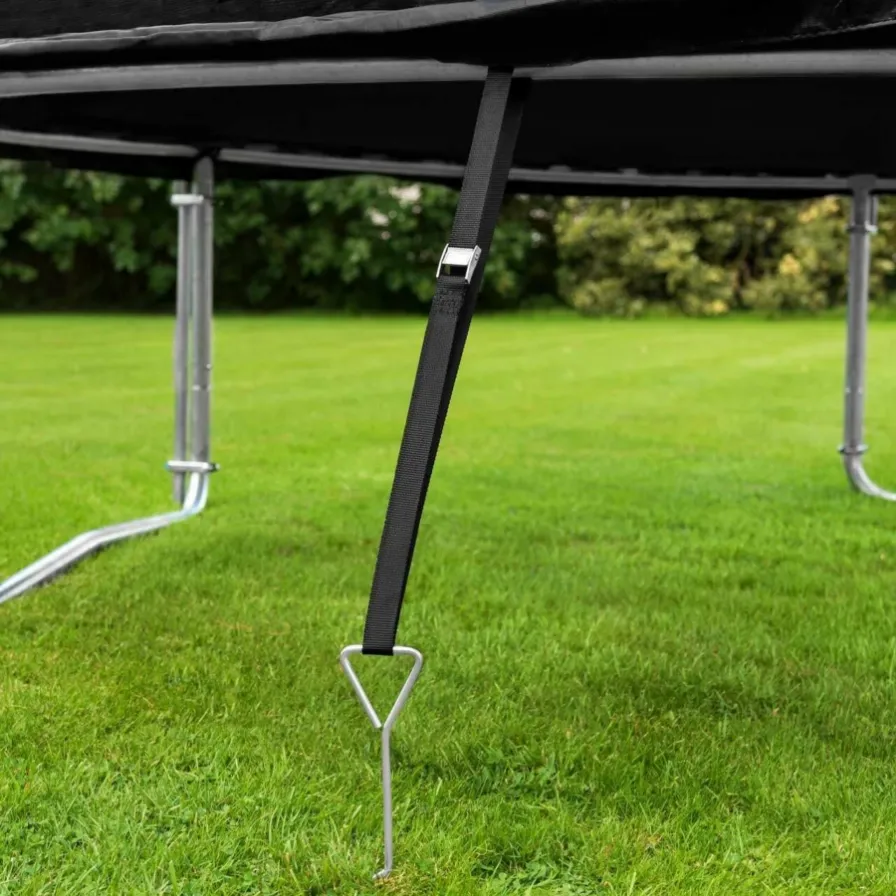
Case 2 — Russia, a missing ground anchor. The trampoline itself was complete and correct, but a ground anchor accessory confirmed in the order was left out at packing. Separately packed accessories are the easiest items to overlook and the hardest to fix after shipment. Final inspection should compare: PO → BOM → standard components → additional accessories → actual packed quantity.
Case 3 — Ukraine & Romania, net components mixed between orders. Safety-net components for two different orders were packed across each other's cartons. Both shipments were "complete" by count and wrong by content — the compatibility failure of section 3 at order level. Model-specific packing lists and separation of similar parts are what prevent it.
5. Prevent Missing and Incorrect Parts at the Packing Stage
- Model-specific packing list for every SKU — never a generic trampoline list.
- Dedicated hardware kits: bolts, screws and small parts kitted and counted per carton, not scooped from a common bin.
- Visual verification: parts checked against photos of the correct configuration at the packing station.
- Carton weight control: each SKU has an approved weight range; an out-of-range carton is opened, not shipped.
- Random carton opening and assembly: sealed cartons are reopened at random and a trampoline is assembled using only what is inside — the single most revealing check in this guide.
- Carton quality: the carton is part of the product. Weak board or poor printing shows up as transit damage and returns; specify carton grade as you would any component.
Complete component sets — like our safety enclosure kit — should be verified the same way: by content against the BOM, not by carton count.
6. Agree the Pre-Shipment Inspection Plan in Advance
Before production starts, agree: what will be inspected (specification, workmanship, parts and packaging), by whom (factory QC, your inspector, or a third party), at what sampling level, and what happens when something fails. Shipment approval should be a documented step — inspection photos or a report you have seen — not a phone call. Finally, calculate honestly what inconsistent quality costs you: replacement parts, re-delivery, refunds, marketplace penalties and reviews. Measured against that number, inspection is the cheapest line in the order.
Pre-Shipment Quality Checklist
- Specification and BOM locked and attached to the PO
- Tube diameter and wall thickness verified by measurement
- Materials inspected before mass production
- In-process checks at cutting, welding and surface treatment
- Spring count = frame holes = mat V-rings, per SKU
- Accessories checked against the PO, not only the BOM
- Carton weight within the approved range
- Random sealed cartons reopened; sample unit assembled from carton contents
- Inspection report or photos approved before loading
Read next: Mini Trampolines: A B2B Sourcing and Market Strategy Guide · Trampoline OEM & ODM Customization: Options for Brands and Importers