Mini Trampolines: A B2B Sourcing and Market Strategy Guide
Mini trampolines for B2B buyers: product definitions, applications, spring vs bungee design, compliance traps, private label options and logistics.
Mini trampolines occupy a different business from garden trampolines: they sell year-round, ship compactly, and serve both the home-fitness market and children's indoor play. This guide defines the category for B2B buyers and works through design, compliance, private label and logistics decisions.
1. What Defines a Mini Trampoline in the B2B Market
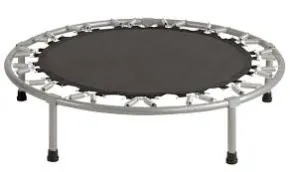
- Diameter typically 36–60 inches; height around 20–30 cm
- Load ratings around 100–150 kg for adult fitness models
- Compact, easy to store and ship; suitable for year-round indoor use
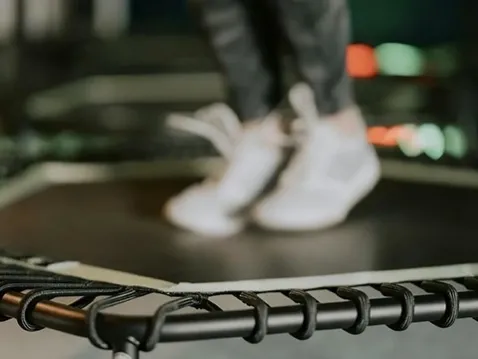
The first sourcing decision is which product you are actually selling: an indoor fitness rebounder for adults, or a low-cost kids' mini trampoline. They share a shape and almost nothing else — frame strength, suspension, handle design and compliance route all differ. Our 45 inch hexagonal rebounder is an example of the fitness end of the category.
2. Applications and End-User Demand
Adult demand centres on low-impact cardio, balance training and weight control in small spaces; children's demand centres on energy release indoors. For distributors, the commercial attractions are structural: the products are simple, easy to store, controlled in movement and light on joint impact, with a minimal footprint. Sales are less seasonal and less weather-dependent than outdoor trampolines, and the category cross-sells naturally with other home-fitness lines.
3. Structural Design: Spring vs Bungee
- Spring designs: strong rebound and lower cost; more noise develops over time.
- Bungee designs: quieter use and a smoother bounce; higher material cost.
Beyond the suspension, check non-slip legs with rubber or TPR foot covers, even leg height, and handle stability on handled models. The recurring failure points are thin or shifting safety pads, load ratings that do not match the construction, and loose leg connections — all visible on a sample, none visible in a catalogue.
4. The Hexagon Format and Studio Buyers
Hexagonal rebounders have become the group-fitness format: six-sided frames tile efficiently in a studio (plan roughly 2.25–2.5 m² per participant station), a six-point frame distributes bungee tension evenly, and an adjustable T-bar handle serves both beginners and choreographed classes. Studio buyers source differently from retailers — a recent direct inquiry we handled was for 20 hexagon units for a gym in Neiva, Colombia, shipped LCL with inland delivery arranged from the port. For small commercial orders like this, confirm LCL handling, per-unit landed cost and a maintenance protocol (quarterly bungee checks in high-traffic use) before quoting.
5. Compliance: The Classification Trap
Mini trampolines sit between two regulatory worlds: EN71 toy standards and indoor fitness equipment rules, with ASTM references and CPSIA material and labelling requirements in the US. The common sourcing mistakes are using toy test reports for adult fitness products, reusing certificates from similar models, and skipping labelling requirements. Confirm the product classification first — it decides which reports you need — and confirm the test basis behind any load rating you print on the box.
6. Private Label and OEM Opportunities
The category private-labels well: compact cartons take branding cleanly, colour and handle options differentiate without re-engineering, and accessory bundles (covers, resistance bands, spare bungee sets) build margin. Keep the OEM discipline of the main customization guide: freeze the specification, verify the sample, and confirm which parts will remain available as spares.
7. Sourcing, Logistics and Cost Control
Mini trampolines are freight-friendly — small cartons, high units per container — which makes landed cost per unit low and e-commerce fulfilment practical. Cost control comes from configuration discipline (section 3), carton optimization, and consolidating accessories into the same shipment. Because the products are less seasonal, buyers can also smooth orders across the year instead of concentrating them in the peak-season window.
Read next: Trampoline Manufacturer FAQ: OEM, Wholesale & Safety Answers for Global Buyers · Trampoline Quality Control & Pre-Shipment Inspection: A Buyer's Guide