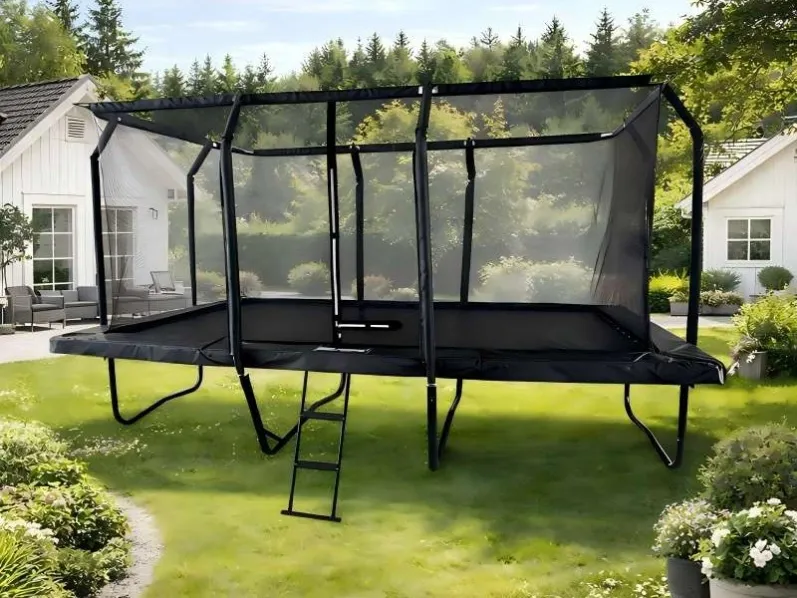
Trampoline Safety Standards & Certifications: EN71-14, ASTM, GS and EAC Explained
Trampoline safety standards explained for importers: EN 71-14, ASTM F381 and F2225, GS and EAC — what each covers and what to ask your manufacturer.
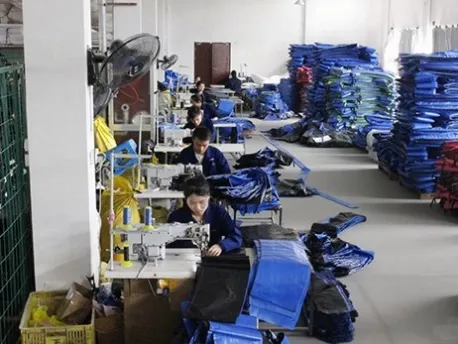
"Is it certified?" is the first question in most trampoline sourcing conversations — and the least useful one on its own. Each market has its own standards and marks, they cover different things, and none of them guarantees that the thousandth unit off the line matches the sample that passed the test. This guide explains what the main standards actually cover, market by market, and what to check beyond the certificate.
1. Europe: EN 71-14
Domestic trampolines sold in the EU are treated as toys, and the relevant standard is EN 71-14, which covers trampolines for domestic use: construction and strength requirements, enclosure and padding provisions, entrapment points, warnings and marking — including the maximum user weight, which must be stated for each model. The edition currently cited in the EU's Official Journal is EN 71-14:2018. A revised 2025 edition has been published; at the time of writing it is not yet the cited harmonised version, so check its status when you plan a new model or a new production run — the transition matters for your technical file. Products are designed and tested to meet the standard; the test report should name your exact model and configuration, not a similar one.
2. United States: ASTM F381 and F2225
The US framework rests on two ASTM standards. ASTM F381 is the consumer safety specification for trampolines themselves — components, assembly, use and warnings. ASTM F2225 covers safety enclosures specifically. Both are voluntary consensus standards in legal terms, but in practice US retailers and marketplaces treat them as requirements: a trampoline that cannot show testing to F381, with an enclosure tested to F2225, will struggle to find shelf space. When you brief a manufacturer for the US market, name both standards in the specification, not just "ASTM".
3. The GS Mark: Voluntary, but Commercially Powerful
GS ("Geprüfte Sicherheit", tested safety) is a voluntary German safety mark, awarded by accredited test bodies after product testing and factory inspection. It is not a legal requirement for selling trampolines in Europe — the legal route is conformity with the applicable EU rules — but German and wider European retailers recognise it as a strong quality signal, and some buyers write it into their purchasing requirements. Treat GS as a commercial decision: worth having for the channels that ask for it, not a substitute for meeting EN 71-14 itself.
4. Russia and the EAEU: EAC
For Russia, Belarus, Kazakhstan, Armenia and Kyrgyzstan, market access runs through EAC conformity. Children's trampolines generally fall under the EAEU technical regulation on toy safety (TR CU 008/2011), which means EAC certification or declaration, with supporting test reports, before the goods can clear and be sold. The paperwork lead time is real — build it into your order schedule, and confirm with your certification agent which document type your exact product classification requires.
5. Beyond the Certificate: Where Safety Is Actually Decided
Standards set the floor. What decides field performance is everything around them:
- Sample vs production. The certified sample proves a design can pass. Ask how production units are kept to the same specification — material verification, batch inspection, and what happens when a batch fails.
- Material ageing. Most trampoline failures appear 12–24 months in, after UV and weather exposure — beyond what a one-time lab test sees. Ask how net and mat UV resistance is specified and verified.
- Corrosion protection. Frame treatment decides lifespan in coastal and humid markets; ask what the treatment is, not just that it exists.
- Traceability. Can the manufacturer connect a shipped carton back to its material batches? That is what makes a recall or a claim manageable instead of catastrophic.
A mainstream model makes the point: an 8ft trampoline sold into both EU and US programmes has to satisfy EN 71-14 and ASTM expectations simultaneously, in every production batch — which is why experienced buyers audit the quality system, not just the certificate folder.
Read next: How to Choose a Safe Kids Trampoline with Enclosure Net · Trampoline Safety Guide: Rules, Risks and Prevention for Every User Group