How to Choose a Safe Kids Trampoline with Enclosure Net
How to choose a safe kids trampoline with enclosure net: inside vs outside nets, frame, padding, mat and stability checks for retailers and importers.
For children's models, the enclosure net is not an accessory — it is the main safety system, and falls off the trampoline are the accident it exists to prevent. Retailers choosing kids trampolines for a range need to evaluate the net, frame, padding and mat as one system. This guide works through the checks in the order a buyer should make them.
1. The Enclosure Net: Material, Entry and Mounting
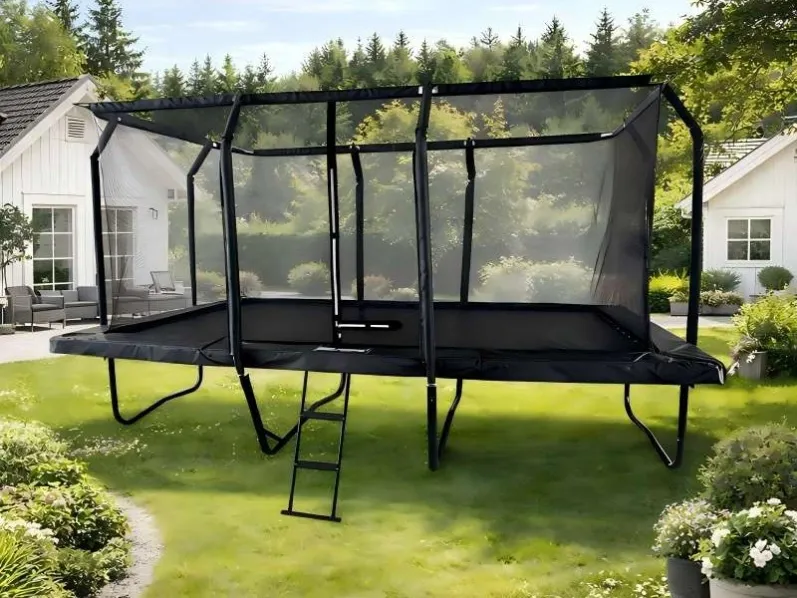
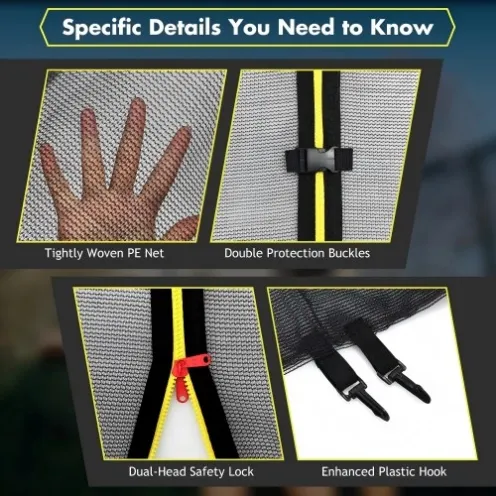
Specify UV-stabilised polyethylene (PE) netting with a weave tight enough that small fingers and toes cannot pass through, while keeping visibility for supervision. The entry matters as much as the mesh: look for a dual closure — zip plus buckle or latch — that children cannot leave hanging open, and check that the zip itself is a heavy-duty part, not a thin plastic one that will fail outdoors.
Then the structural choice: inside-mounted vs outside-mounted nets. On an inside-mounted design, the poles stand outside the spring area and the net hangs vertically inside the frame, so a jumper who hits the net is directed back onto the mat, away from springs and steel. On an outside-mounted design, the net slopes outward and the full mat stays usable — but a jumper can be directed down toward the springs and frame. For children's models, the inside-mounted net is the safer specification, and the small loss of jumping area is the right trade.
2. Frame and Spring Padding
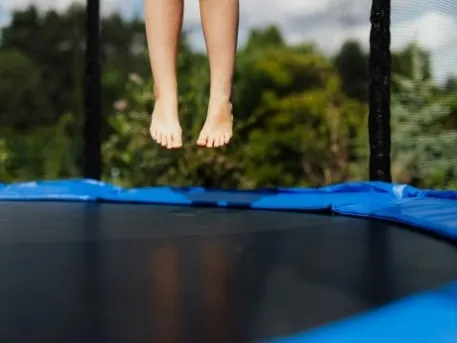
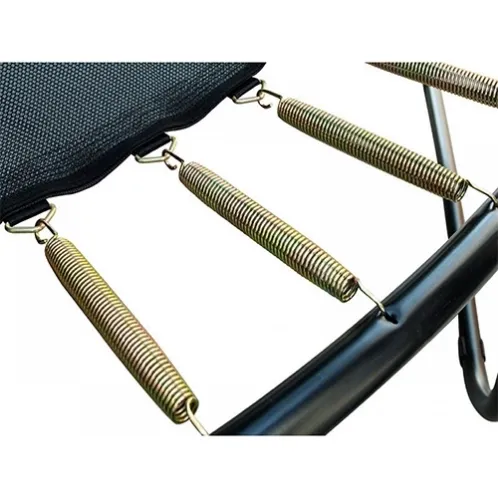
The frame is the backbone: galvanised steel, with the coating protecting inside and out, is what survives seasons of rain and humidity. The spring pad is the barrier between the jumper and the springs and frame — it should be thick and dense enough to absorb impact, UV-resistant so it does not crack, and securely tied or strapped so it cannot shift and expose the springs. A pad that has gone thin or brittle is a replacement item, not a cosmetic issue.
3. Jumping Mat and Springs
The bounce comes from woven polypropylene (PP) mat fabric and the spring set working together. Check that the mat material is specified (woven PP, UV-treated) rather than described in marketing language, that springs are rust-resistant and evenly distributed, and that the spring count matches the mat's V-ring count exactly. All springs must sit under the pad — any exposed spring is a defect, full stop.
4. Stability: Legs, Ground and Anchoring
A kids trampoline must not rock, walk or tip under energetic use. W-shaped or curved leg bases spread the load over a wider footprint than straight legs and are the more stable specification. Site the trampoline on level, soft ground away from fences, trees and walls; in exposed or windy areas, add ground anchors. Stability is also an installation outcome — a well-built trampoline assembled on a slope will still behave badly.
5. Age and Capacity Positioning
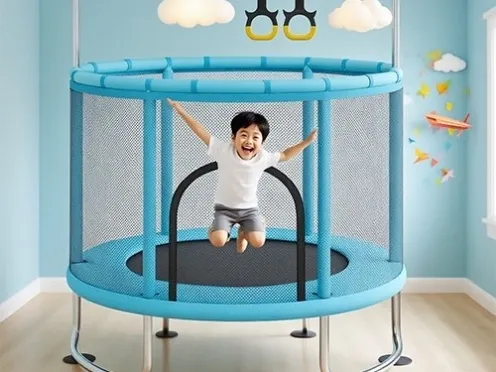
Match the model to the child honestly. Small indoor models serve the youngest users: a toddler trampoline with enclosure net keeps the same net-and-padding logic at toddler scale, for supervised indoor play. For outdoor kids models, state the rated capacity and design age plainly in the listing — on our own 4.5FT kids model with net, the rated capacity is 50 kg, and the model is positioned for young children, not as a small version of the family sizes. Clear positioning prevents the most common misuse: older, heavier children on a trampoline that was never built for them.
Read next: Trampoline Weight Limits Explained: How Much Weight Can a Trampoline Hold? · Trampoline Safety Standards & Certifications: EN71-14, ASTM, GS and EAC Explained