Trampoline Safety Guide: Rules, Risks and Prevention for Every User Group
Trampoline safety guide for every user group: universal rules, age-specific guidance, multi-jumper risks and the checks retailers should print in manuals.
Most trampoline injuries are not caused by defective products. They are caused by how trampolines are used: several jumpers at once, no supervision, worn parts nobody checked. For retailers and importers, that makes safety guidance part of the product — the rules printed in your manuals and listings decide how the trampoline performs in the real world. This guide collects the rules that apply to everyone, then the specific guidance for each user group, so you can pass them on accurately.
1. The Rules That Apply to Everyone
- Active supervision. An adult should be present and watching whenever the trampoline is in use — not indoors, not on a phone.
- One jumper at a time. Collisions between jumpers are a leading cause of injury, and the lighter jumper always comes off worse. This single rule prevents more accidents than any other.
- Pre-use check. Before every session: mat for tears or wetness, springs and frame for rust or damage, pad and net for wear. Thirty seconds, every time.
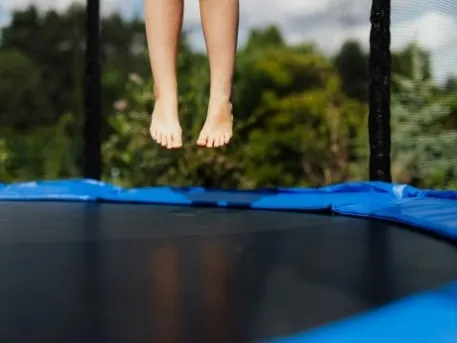
- Nothing on the mat. Empty pockets; no jewellery, watches or sharp objects; no shoes — bare feet or grip socks.
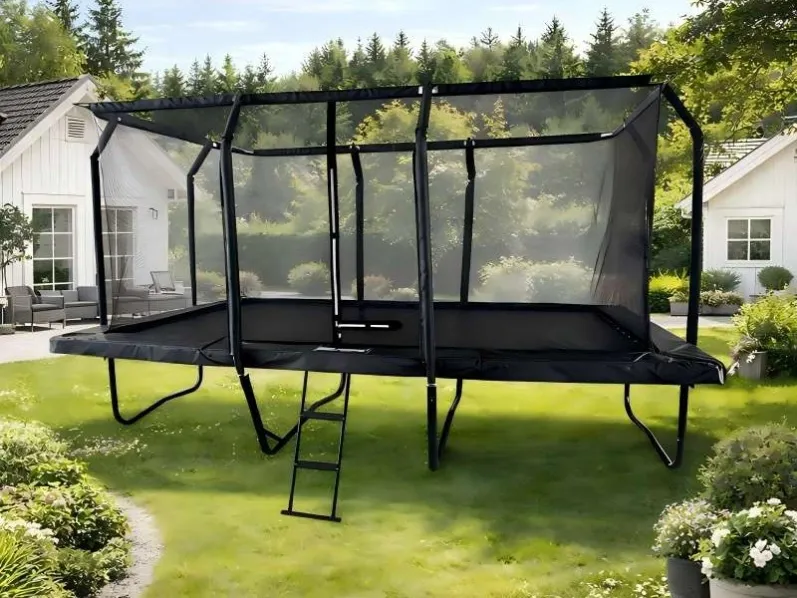
- Clear space. Allow at least 1.8 m (6 ft) of clear space around the trampoline and check overhead for branches and lines. Never place it near walls, fences or hard objects.
- No access when not in use. Remove the ladder or close and secure the enclosure so children cannot climb on unsupervised.
2. Toddlers and Children Under 6
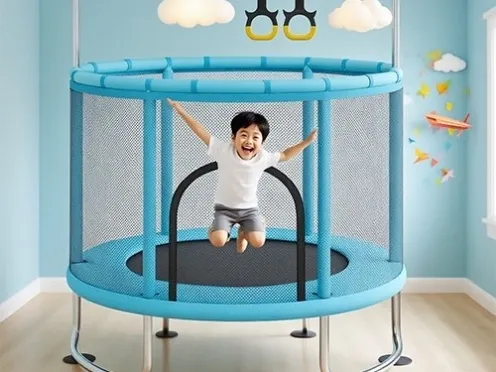
Young children have developing bones, limited coordination and almost no danger awareness. Paediatric and safety organisations advise against under-6s using full-size trampolines at all, and your listings should say so plainly. The appropriate products for this age group are low mini trampolines with a support handle, used indoors under direct supervision. If a young child is allowed on a full-size trampoline despite the guidance, it should only be with an adult physically supporting them, gentle low bounces only, and never — under any circumstances — unsupervised.
3. Children and Teens (6–16)
This is the highest-energy group and the one that tests limits. The boundaries worth printing and repeating:
- No somersaults, flips or rough play — neck and spine injuries from failed flips are among the most serious in the category.
- Never jump onto the trampoline from a ladder, roof or any other object, and never crawl underneath while someone is bouncing.
- Teach controlled technique: jump in the centre, learn to stop by bending the knees, and if a fall happens, bend the knees and roll rather than bracing with straight arms.
- Climb off — never jump off the edge to the ground.
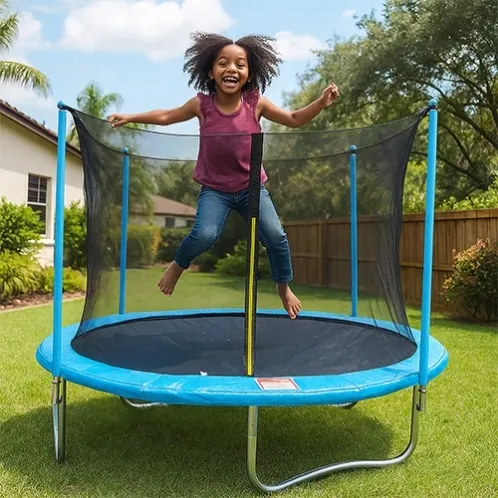
The equipment has to support the rules: a full enclosure net, complete spring padding, and a frame that stays stable under energetic use. Models built for younger users, such as our kids round trampoline with net, combine the enclosure and padding into the standard specification rather than selling them as options — that is the configuration to recommend for this age group.
4. Adult Users
Adults bring more body weight, which means higher impact forces on every landing — and often more confidence than skill. Warm up before jumping; do not attempt aerial manoeuvres without proper training; stop when tired, because fatigue destroys coordination before it destroys strength. Adult use also stresses the equipment harder, so inspection frequency should increase accordingly. Fitness rebounders are a separate, lower-intensity category with their own technique — treat them as such in your range and your guidance, not as small versions of a garden trampoline.
5. Multiple Jumpers and Users Who Should Not Jump
The one-jumper rule exists because of the double-bounce effect: when two people land out of sync, the mat returns the combined energy into the lighter jumper, who can be thrown far higher — and land far worse — than expected. Weight differences make it worse, which is why an adult and a small child bouncing together is one of the most dangerous combinations of all.
Some users should not jump at all. Trampolining is not recommended during pregnancy, and people with neck, back or joint conditions, or recovering from injury, should take medical advice before using one. Retailers do not need to police this — but the warning belongs in the manual and on the product page, where it protects both the user and you.
6. If an Accident Happens
Stop using the trampoline immediately. If a neck or back injury is possible, do not move the injured person — keep them still and call emergency services. For other injuries, get the person off the mat carefully and seek medical assessment rather than "walking it off". Afterwards, record what happened: which model, what condition it was in, and how it was being used. For a retailer, that record is what turns an incident into usable information — for the warranty file, for the supplier, and for the next version of your safety guidance.
Read next: Trampoline Safety Standards & Certifications: EN71-14, ASTM, GS and EAC Explained · How to Choose a Safe Kids Trampoline with Enclosure Net