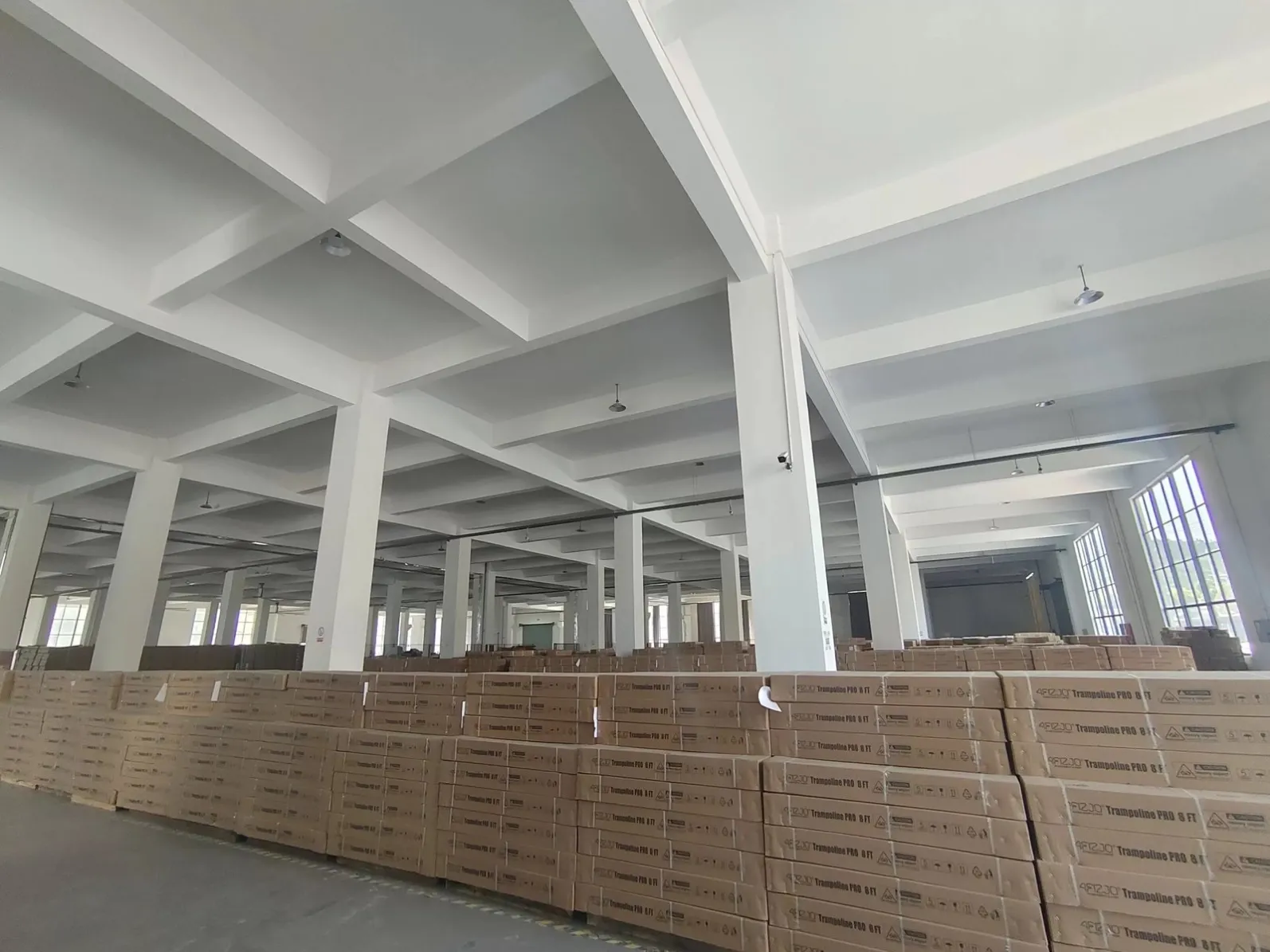
14FT Trampoline Spare Parts Case: When Higher Specifications Become Harder to Support
An 88-spring 14FT trampoline needed a replacement mat the market no longer stocks. What this case teaches importers about specification and spare parts planning.
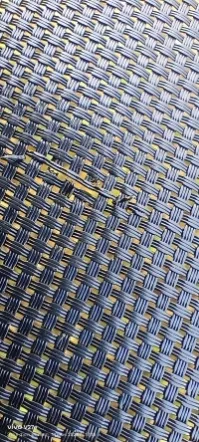
A Replacement Mat Request That Taught Us an Important Lesson
Recently, one of our long-term customers contacted us with what seemed like a simple after-sales request.
Their customer had accidentally damaged the jumping mat on a 14FT trampoline and needed a replacement.
At first, we assumed this would be an easy solution. After all, replacement mats are among the most common trampoline spare parts.
However, this case quickly revealed an interesting challenge that many distributors, retailers, and brands may overlook when selecting trampoline specifications.
The Problem: An 88-Spring Trampoline
The trampoline in question was equipped with 88 springs.
Several years ago, this was a common configuration for many premium 14FT trampolines. More springs generally provided better weight distribution, improved bounce performance, and a stronger premium product positioning.
The customer began searching locally for a replacement mat.
The result?
Almost every replacement mat available on the market was designed for 80-spring trampolines.

The original 88-spring configuration had become increasingly difficult to find.
Why Did This Happen?
The answer is simple: market evolution.
Over the past several years, many trampoline manufacturers have focused heavily on cost optimization.
To reduce production costs, specifications have gradually changed:
- Higher spring counts were reduced.
- Padding thickness was lowered.
- Steel tube specifications were adjusted.
- Certain premium features became optional instead of standard.
As a result, 80-spring configurations gradually became the market norm for many 14FT trampolines.
While this helped reduce manufacturing costs, it also created compatibility challenges for older products.
The Hidden Cost of Specification Changes
When buyers compare trampolines, the discussion often focuses on:
- Price
- Frame diameter
- Padding thickness
- Safety net quality
- Weight capacity
However, one important factor is frequently ignored:
Will replacement parts still be available years later?
A small specification change today can create significant after-sales challenges in the future.
For example:
An 80-spring replacement mat cannot simply be installed on an 88-spring trampoline.
Even if the size appears identical, the attachment points will not match correctly.
The result is:
- Longer waiting times
- Higher replacement costs
- Increased customer frustration
- Additional workload for distributors and retailers
Quality Is Only Part of the Equation
Many buyers assume that selecting the highest specification automatically guarantees the best long-term solution.
In reality, the decision is more complex.
The best product is often the one that balances:
- Product performance
- Market demand
- Spare parts availability
- Long-term serviceability
A specification that is too far outside market standards may eventually become difficult to support, even if it performs exceptionally well.
How We Solved the Problem
To help our customer, we immediately contacted our production team and partner factories.
Fortunately, we were able to source an 88-spring replacement mat and arrange shipment.
At the same time, we began discussing future product planning with the customer.
For upcoming orders, we are comparing the advantages and disadvantages of:
Option 1: Continue with 88 Springs
Advantages:
- Premium product positioning
- Stronger bounce performance
- Better differentiation from entry-level products
Challenges:
- More expensive
- Less common spare parts availability
Option 2: Transition to 80 Springs
Advantages:
- Lower product cost
- Easier spare parts sourcing
- Better compatibility with current market standards
Challenges:
- Less differentiation from competing products
There is no universal answer. The right choice depends on each brand's market positioning and long-term strategy.
What Buyers Should Consider Before Ordering
When selecting trampoline specifications, distributors and brands should ask:
- Will spare parts still be available in 3–5 years?
- Are replacement mats compatible with industry standards?
- Does the supplier maintain spare parts inventory?
- How quickly can replacement parts be delivered?
- Is the chosen specification likely to remain common in the market?
These questions often become far more important than saving a few dollars during the initial purchase.
Final Thoughts
This replacement mat request reminded us of an important reality:
A trampoline is not just a product.
It is a long-term commitment that includes maintenance, spare parts, customer service, and product support.
The best trampoline specification is not always the cheapest, nor is it always the most expensive.
The best specification is the one that delivers the right balance between performance, cost, and long-term support.
Because when a customer needs a replacement part several years later, that balance suddenly becomes very important.
Looking for a trampoline supplier that can support both production and long-term spare parts availability?
Explore our OEM Trampoline Manufacturing Services to learn how we help brands, distributors, and retailers develop reliable trampoline products with consistent quality, spare parts support, and flexible OEM/ODM solutions.
See also our wider outdoor range, including the rectangular tree swing.
Read next: What Customers Around the World Say About TrampJoy Trampolines · Why We Said No to a Major 16FT Trampoline Order: A Story of Integrity